The Kingdom of Croatia was part of the Lands of the Hungarian Crown, but was subject to direct Imperial Austrian rule for significant periods of time, including its final years. Its capital was Zagreb
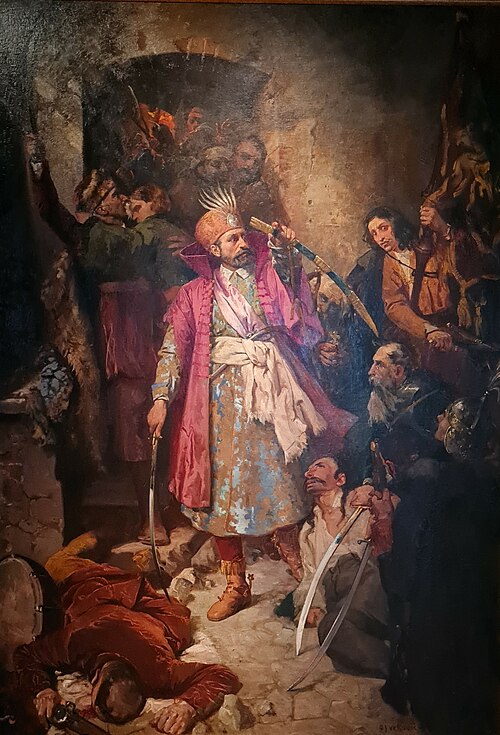
Nikola Šubić Zrinski by Oton Iveković. The work depicts Croatian Ban Nikola IV Zrinski defending against the Ottomans at the Battle of Szigetvár

The Croatian Parliament (Sabor) in 1848. The tricolour flag can be seen in the background.
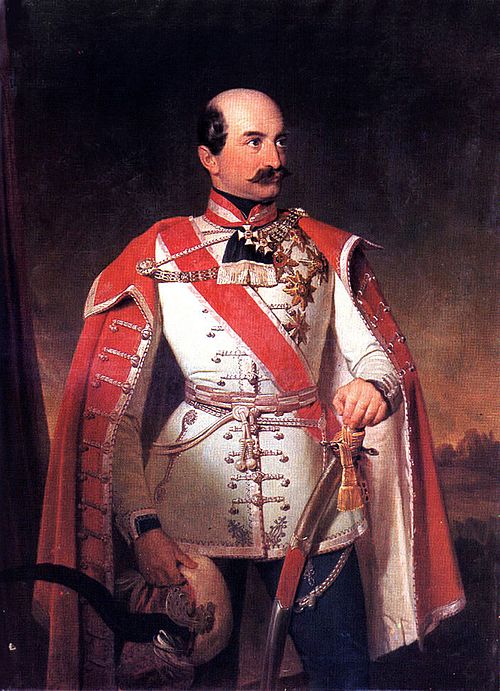
Field Marshal count Josip Jelačić, Ban of the Kingdom of Croatia-Slavonia and Commander of the Croatian Military Frontier.
Kingdom of Croatia-Slavonia
Videos
The Kingdom of Croatia-Slavonia or the Triune Kingdom of Croatia, Slavonia and Dalmatia was a nominally autonomous kingdom and constitutionally defined separate political nation within the Austro-Hung
Kingdom of Croatia (Habsburg)
…organized as the Kingdom of Slavonia and included within the Kingdom of Croatia as an autonomous part. In 1868, they were merged into the newly formed Kingdom of Croatia-Slavonia. Following the fall of the medieval Kingdom of Hungary at the Battle of Mohács, in 1527 the Croatian and Hungarian nobles needed to decide on a new…

Ivan Mažuranić, Ban (viceroy) of the Triune Kingdom of Croatia (in office 1873–1880)

Sculpture symbolizing the Triune Kingdom of Croatia, Zagreb

Banski dvori (Ban's Court), the palace of the Ban of Croatia, in Zagreb, today the seat of the Croatian Government

The coat of arms of the Triune Kingdom on the building of the Croatian Parliament