Kipchaks
Videos
The Kipchaks, also spelled Qipchaqs, known as Polovtsians in Russian sources, were Turkic nomads and then a confederation that existed in the Middle Ages inhabiting parts of the Eurasian Steppe.
A Safavid depiction of the Padishah (Emperor) of Dast-i Qipchaq ("Steppe of the Kipchaks"). Tabriz or Qavin, circa 1550. British Museum, Padishah (Emperor) of Dast-i Qipchaq, (1550). Possible portrait of Kazakh khan


Kipchak portrait in a 12th-century balbal in Luhansk.
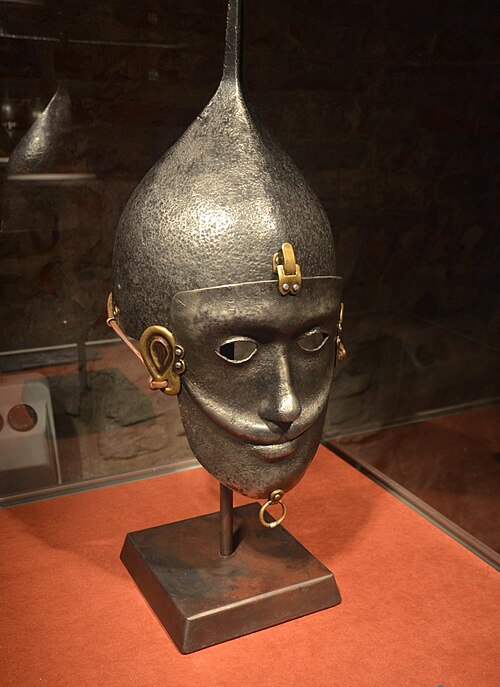
Reproduction of a 13-14th century Tatar helmet and mask found in Lipovets, without a chainmail aventail.

Facial reconstruction of Kipchak from 14th-century grave
Cumania
Videos
The name Cumania originated as the Latin exonym for the Cuman–Kipchak confederation, which was a tribal confederation in the western part of the Eurasian Steppe, between the 10th and 13th centuries. T
Kipchaks
…and later as part of a confederation with the Cumans. There were groups of Kipchaks in the Pontic–Caspian steppe, China, Syr Darya, and Siberia. Cumania was conquered by the Mongol Empire in the early 13th century and integrated into the Golden Horde, which also went on to become known as Kipchak Khanate…

Cuman-Qıpčaq warrior-statue with musical instrument carved at its feet (left). Simferopol Museum, Crimea, Ukraine.

Cuman statues, Moscow State Historical Museum

Cuman-Kipchak statue, 12th-13th century, Ukraine