Kugyō
Videos
Kugyō is the collective term for the most important officials attached to the court of the Emperor of Japan in pre-Meiji eras. The term generally referred to the Kō and Kei court officials and denoted
Prince Sanjō Sanetomi, the last Chancellor of the Realm of Japan

Kazoku
Videos
The Kazoku was the hereditary peerage of the Empire of Japan, which existed between 1869 and 1947. It was formed by merging the feudal lords and court nobles into one system modelled after the British
Kugyō
…of the Fourth Rank were also included. In 1869, following the Meiji Restoration, the court nobility and daimyo were merged into a new peerage, the kazoku. The kugyō generally refers to two groups of court officials…

The House of Peers in session with Emperor Meiji giving a speech (Ukiyo-e woodblock print by Yōshū Chikanobu, 1890)

Prince Tokugawa Iesato, first head of the Tokugawa clan after the overthrow of the shogunate, was President of the House of Peers from 1903 to 1933.

The interior of the Peers' Club, Tokyo (1912). Unlike Western-style gentlemen's clubs, membership was also open to women.
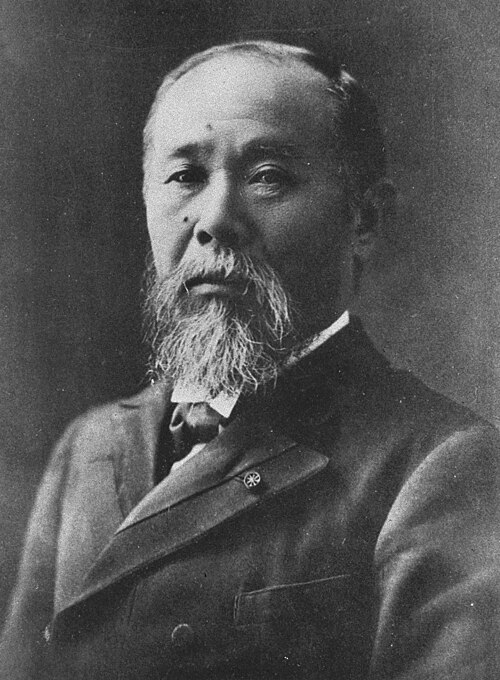
Japan's first Prime Minister Itō Hirobumi, despite being born the son of an impoverished farmer, he was ennobled as prince.