Kuiper belt
Videos
The Kuiper belt is a circumstellar disc in the outer Solar System, extending from the orbit of Neptune at 30 astronomical units to approximately 50 AU from the Sun. It is similar to the asteroid belt,

Pluto and Charon in false color

Astronomer Gerard Kuiper, after whom the Kuiper belt is named

In 1980, astronomer Julio Fernandez predicted the existence of a belt. It has been said that because the words "Kuiper" and "comet belt" appeared in the opening sentence of Fernandez's paper, this hypothetical region was referred to as the "Kuiper belt".

Telescopes atop Mauna Kea. The Kuiper belt was discovered with UH88, which is the fourth from the left
Asteroid belt
Videos
The asteroid belt is a torus-shaped region in the Solar System, centered on the Sun and roughly spanning the space between the orbits of the planets Jupiter and Mars. It contains a great many solid, i
Kuiper belt
…in the outer Solar System, extending from the orbit of Neptune at 30 astronomical units (AU) to approximately 50 AU from the Sun. It is similar to the asteroid belt, but is far larger—20 times as wide and 20–200 times as massive. Like the asteroid belt, it consists mainly of small bodies or remnants from when the…

By far the largest object within the belt is the dwarf planet Ceres. The total mass of the asteroid belt is significantly less than Pluto's, and roughly twice that of Pluto's moon Charon.
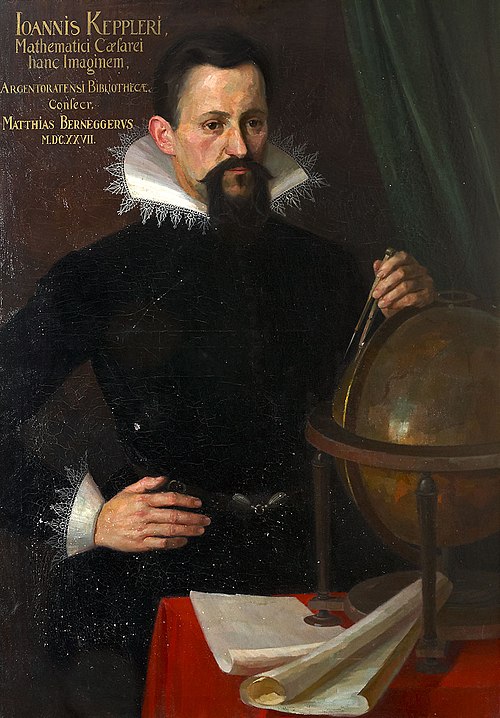
In 1596, Johannes Kepler's sense of proportion for the planetary orbits led him to believe that an undiscovered planet lay between the orbits of Mars and Jupiter.

Giuseppe Piazzi, discoverer of Ceres, the largest object in the asteroid belt: Ceres was known as a planet, but later reclassified as an asteroid and from 2006 as a dwarf planet.

951 Gaspra, the first asteroid imaged by a spacecraft, as viewed during Galileo's 1991 flyby; colors are exaggerated