Lawrence Hargrave
Videos
Lawrence Hargrave, MRAeS, was an Australian engineer, explorer, astronomer, inventor and aeronautical pioneer. He was perhaps best known for inventing the box kite, which was quickly adopted by other
Lawrence Hargrave, c. 1890


Hargrave (seated) and Swain demonstrate the manlift kites (labelled A, B, D, & E), sling seat and spring balance in the parkland behind Stanwell Park beach, November 1894

Hargrave lifted sixteen feet from the ground by a tandem of his box kites.
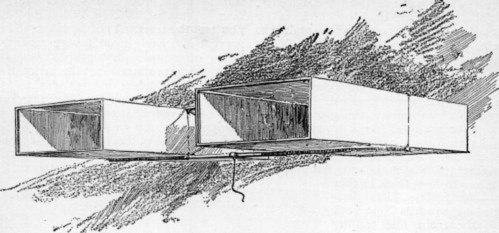
The Hargrave box-kite. It was by kites of this variety, flown in tandem, that the inventor, Hargrave, was lifted sixteen feet from the ground on 12 November 1894.
Rotary engine
Videos
The rotary engine is a type of reciprocating internal combustion engine, usually designed with an odd number of cylinders per row in a radial configuration. In most designs, the engine's crankshaft re
Lawrence Hargrave
…the box kite (1893), which greatly improved the lift to drag ratio of early gliders; work on the rotary engine, which powered many early flying machines up until about 1920. Of great significance to those pioneers working toward powered flight, Hargrave successfully…

An 80 horsepower (60 kW) rated Le Rhône 9C, a typical rotary engine of WWI. The copper pipes carry the fuel-air mixture from the crankcase to the cylinder heads acting collectively as an intake manifold.

This Le Rhône 9C installed on a Sopwith Pup fighter aircraft at the Fleet Air Arm Museum. Note the narrowness of the mounting pedestal to the fixed crankshaft (2013), and the size of the engine

Megola motorcycle with rotary engine mounted in the front wheel

An 1897 Félix Millet motorcycle