Le Cid
Videos
Le Cid is a five-act French tragicomedy written by Pierre Corneille, first performed in December 1636 at the Théâtre du Marais in Paris and published the same year. It is based on Guillén de Castro's
Title page of 1637 printing of Le Cid


Portrait of Pierre Corneille, the playwright

Chimène - Costume for Massenet's Opera based on Le Cid by Ludovic Napoléon Lepic in 1885
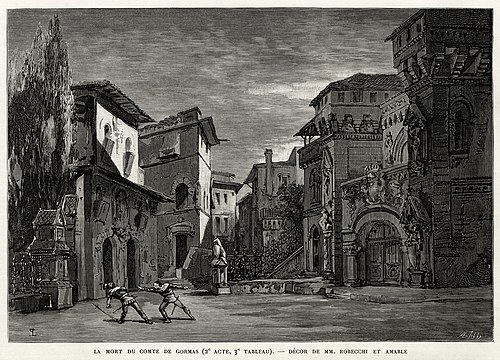
The Duel - Drawn for Massenet's Opera based on Le Cid
El Cid
Videos
Rodrigo Díaz de Vivar was a Castilian knight and ruler in medieval Spain. Fighting with both Christian and Muslim armies during his lifetime, he earned the Arabic honorific as-Sayyid, which would evol
Le Cid
…in Paris and published the same year. It is based on Guillén de Castro's play Las Mocedades del Cid. Castro's play in turn is based on the legend of El Cid. An enormous popular success, Corneille's Le Cid was the subject of a heated polemic over the norms of dramatic practice known as the Querelle du Cid…

Statue of El Cid in Burgos, Spain

Here on the penultimate and final line of the document's text appears the autograph of Rodrigo Díaz: «ego ruderico, simul cum coniuge mea, afirmo oc quod superius scriptum est.» This translates as "I Rodrigo, together with my wife, affirm that which is written above."

First paragraph of the Carmen Campidoctoris, the earliest literary treatment of El Cid's life, written to celebrate El Cid's defeat of some counts and champions

Marcos Giráldez de Acosta painting (1864) depicting the "Santa Gadea Oath". In the middle of the scene, Alfonso VI (with red cape) is swearing with his right hand on the Bible that he did not take part in the murder of his brother Sancho II, while El Cid stands as a witness in front of him.