Lever
Videos
A lever is a simple machine consisting of a beam or rigid rod pivoted at a fixed hinge, or fulcrum. A lever is a rigid body capable of rotating on a point on itself. On the basis of the locations of f

Levers can be used to exert a large force over a small distance at one end by exerting only a small force (effort) over a greater distance at the other.
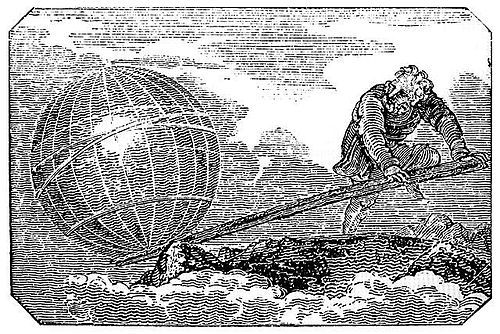
Archimedes lever, Engraving from Mechanics Magazine, published in London in 1824

Simple lever, fulcrum, and vertical posts
Crowbar
Videos
A crowbar is a lever consisting of a metal bar with a single curved end and flattened points, used to force two objects apart or gain mechanical advantage in lifting; often the curved end has a notch
Lever
…effort and the resistance: The effort is applied on one side of the fulcrum and the resistance (or load) on the other side. For example, a seesaw, a crowbar, a pair of scissors, a balance scale, a pair of pliers, and a claw hammer (pulling a nail). With the fulcrum in the middle, the lever's mechanical…

A crowbar with a curved chisel end to provide a fulcrum for leverage and a goose neck to pull nails