Lithuanian nobility
Videos
Photos
The Lithuanian nobility or Lithuanian szlachta was historically a legally privileged hereditary elite class in the Kingdom of Lithuania and Grand Duchy of Lithuania consisting of Lithuanians from Lithuania Proper; Samogitians from Duchy of Samogitia; following Lithuania's eastward expansion into what is now Belarus, Ukraine and Russia, many ethnically Ruthenian noble families (boyars); and, later on, predominantly Baltic German families from the Duchy of Livonia and Inflanty Voivodeship.

Medieval Coat of Arms of Lithuania was inherited by oldest families

Crossed arrows motive indicates the oldest type of heraldry in Lithuania after formal Christianization, like Kościesza coat of arms
Lithuanian language
Videos
Photos
Lithuanian is an East Baltic language belonging to the Baltic branch of the Indo-European language family. It is the language of Lithuanians and the official language of Lithuania as well as one of the official languages of the European Union. There are approximately 2.8 million native Lithuanian speakers in Lithuania and about 1 million speakers elsewhere. Around half a million inhabitants of Lithuania of non-Lithuanian background speak Lithuanian daily as a second language.
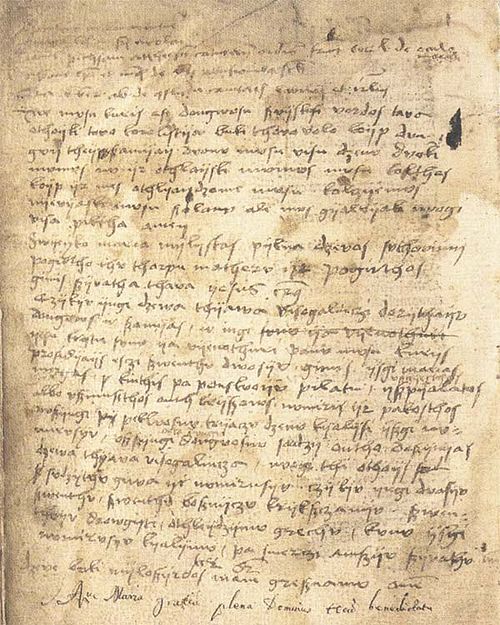
The oldest surviving manuscript in Lithuanian (c. 1503), rewritten from a 15th century original text.

Ethnolinguistic area of Lithuanians and the Lithuanian language in 1917 by Prussian Lithuanian professor Vilius Gaigalaitis (Wilhelm Gaigalat), the dashed areas represent linguistically mixed border areas where Lithuanians formed a large minority
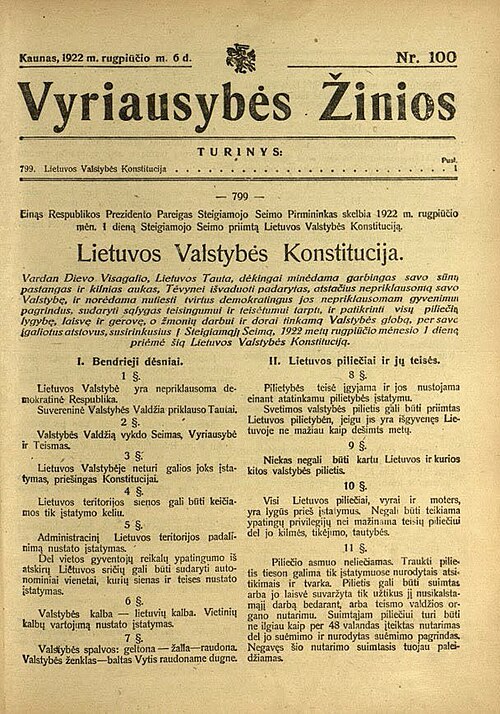
Title page of Vyriausybės Žinios with articles of the 1922 Constitution of Lithuania. The sixth article established Lithuanian as the sole official language of Lithuania.
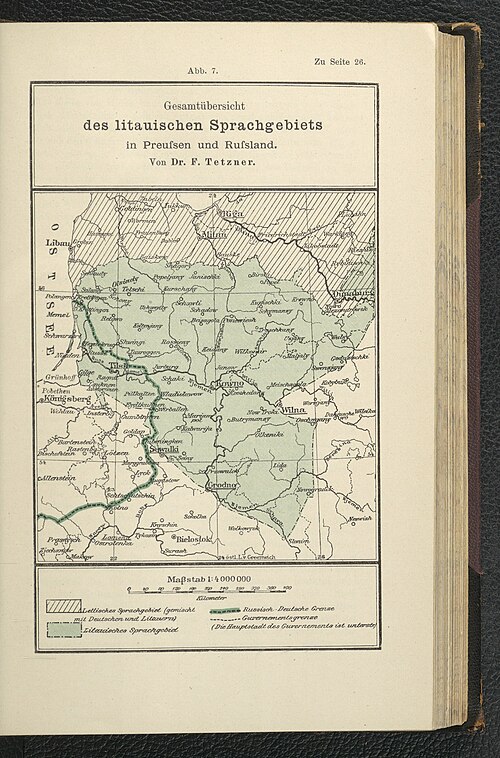
Linguistic areal of the Lithuanian language in Russia and German Prussia by Ethnographer Franz Oskar Tetzner in 1902