Lock (water navigation)
Videos
A lock is a device used for raising and lowering boats, ships and other watercraft between stretches of water of different levels on river and canal waterways. The distinguishing feature of a lock is

Canal lock and lock-keeper's cottage on the Aylesbury Arm of the Grand Union Canal at Marsworth in Buckinghamshire, England

Lock on the River Neckar at Heidelberg in Germany

Three Gorges Dam lock near Yichang on the Yangtze river, China

Operation of a canal lock 1–3. Boat enters 'empty' lock 4. Bottom gates are closed, bottom paddles closed, top paddles opened, lock starts to fill 5. Lock is filling with water, lifting boat to the higher level
Panama Canal
Videos
The Panama Canal is an artificial 82-kilometer waterway in Panama that connects the Caribbean Sea with the Pacific Ocean. It cuts across the narrowest point of the Isthmus of Panama, and is a conduit
Lock (water navigation)
…to drain the lock to a nearby burn. Locks can be built side by side on the same waterway. This is variously called doubling, pairing, or twinning. The Panama Canal has three sets of double locks. Doubling gives advantages in speed, avoiding hold-ups at busy times and increasing the chance of a boat finding a lock…

Ferdinand de Lesseps, the French originator of the Suez Canal and the Panama Canal

Part de Fondateur of the Compagnie Universelle du Canal Interocéanique de Panama, issued 29 November 1880
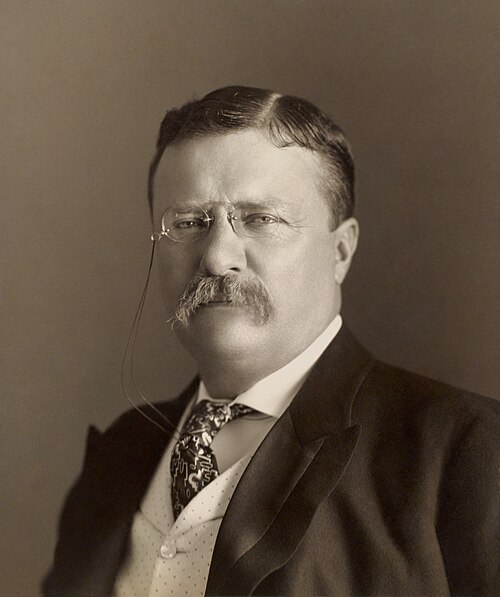
United States President Theodore Roosevelt (1901–1909), the driving force behind US construction of the Panama Canal.

The US's intentions to influence the area (especially the Panama Canal construction and control) led to the separation of Panama from Colombia in 1903.