Londinium
Videos
Londinium, also known as Roman London, was probably the capital of Roman Britain during most of the period of Roman rule. Most twenty-first century historians think that it was originally a settlement

The rediscovery of Tacitus's works revived English interest in Boudica, particularly during the 19th century, when she was used as a symbol for Queen Victoria and the British Empire. (Boadicea and Her Daughters by Thomas Thornycroft, 1860s, cast by his son in 1902.)

A model of London in 85–90 AD on display in the London Museum, depicting the first bridge over the River Thames, shown as having been of largely wooden construction

A diagram of the Roman structures from the port of Londinium (c. AD 100) excavated along the north bank of the Thames, with warehouses at right
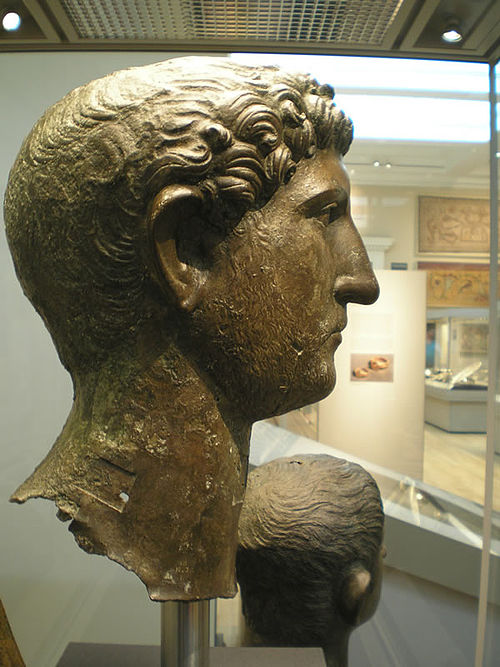
A bronze head of Hadrian found in the River Thames in London (British Museum)
London Wall
Videos
The London Wall is a defensive wall first built by the Romans around the strategically important port town of Londinium in c. AD 200, as well as the name of a modern street in the City of London, Engl
Londinium
…relatively undisturbed for centuries. Some time between 190 and 225, the Romans built a defensive wall around the landward side of the city. The London Wall survived for another 1,600 years and broadly defined the perimeter of the City of London. The etymology of the name Londinium is unknown. Following…

London Roman Wall – surviving section by Tower Hill gardens cross-section

A surviving fragment of the original 3rd-century Roman Wall in Cooper's Row near Tower Hill
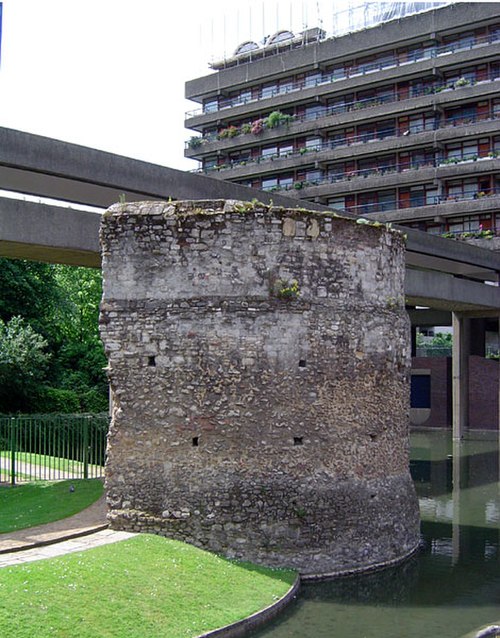
Bastion 12, which is near the Barbican Estate, stands on Roman foundations with an upper structure of 13th-century masonry.

Yorkist forces attack the Lancastrians during the siege of London, 12–15 May 1471.