MAUD Committee
Videos
The MAUD Committee was a British scientific working group formed during the Second World War. It was established to perform the research required to determine if an atomic bomb was feasible. The name MAUD came from a strange line in a telegram from Danish physicist Niels Bohr referring to his housekeeper, Maud Ray.


The Poynting Physics building at the University of Birmingham, where Peierls and Frisch wrote the Frisch–Peierls memorandum
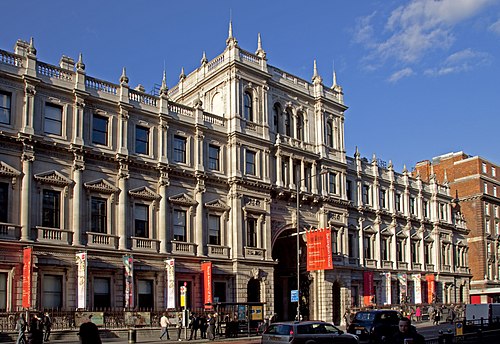
Burlington House in London, where the MAUD Committee met

Royal Fort and the Physics Department at the University of Bristol
Mark Oliphant
Videos
Sir Marcus Laurence Elwin Oliphant, was an Australian physicist and humanitarian who played an important role in the first experimental demonstration of nuclear fusion and in the development of nuclear weapons.


The Cavendish Laboratory was the home of some of the great discoveries in physics. It was founded in 1874 by the Duke of Devonshire (Cavendish was his family name), and its first professor was James Clerk Maxwell.

Sir Ernest Rutherford's laboratory, 1926