MISTRAM
Videos
MISTRAM was a high-resolution tracking system used by the United States Air Force to provide highly detailed trajectory analysis of rocket launches.

MISTRAM Missile Trajectory Measurement System.

Five receiving stations on 10,000 ft and 100,000 ft baselines receive signals from missile, compute the velocity, position and trajectory.

MISTRAM block diagram shows ground-based components and airborne transponder.

MISTRAM "A" Model Transponder
Radar
Videos
Radar is a system that uses radio waves to determine the distance, direction, and radial velocity of objects relative to the site. It is a radiodetermination method used to detect and track aircraft,
MISTRAM
…Air Force (and later NASA) to provide highly detailed trajectory analysis of rocket launches. A "classic" ranging system used since the 1960s uses radar to time a radio signal's travel to a target (in this case, the rocket) and back. This technique is accurate to approximately 1%. The accuracy of this…
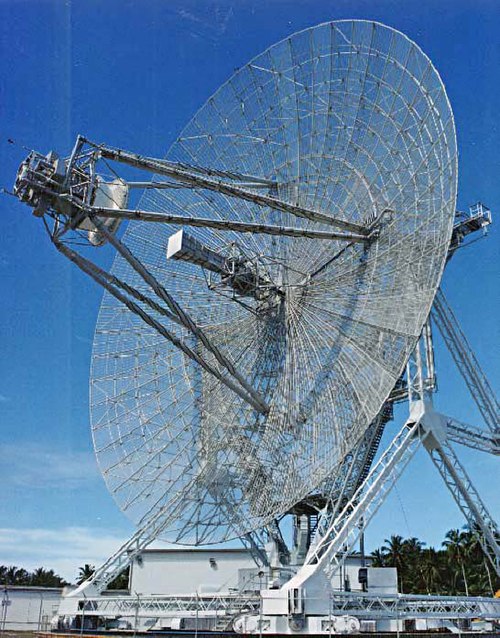
Long-range radar antenna, used to track space objects and ballistic missiles.

Radar of the type used for detection of aircraft. It rotates steadily, sweeping the airspace with a narrow beam.
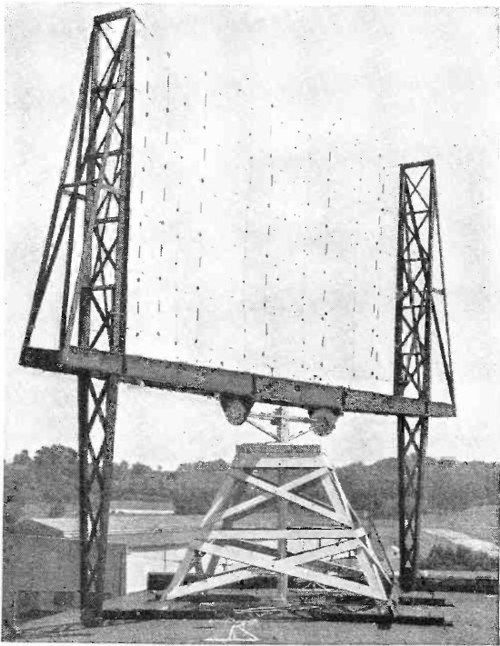
Experimental radar antenna, US Naval Research Laboratory, Anacostia, D. C., from the late 1930s (photo taken in 1945)

The first workable unit built by Robert Watson-Watt and his team