Mahavira
Videos
Mahavira, also known by his birth name Vardhamana, was an Indian religious reformer and spiritual leader, considered by Jains to be the 24th and final Tirthankara in the current time cycle of Jain cos
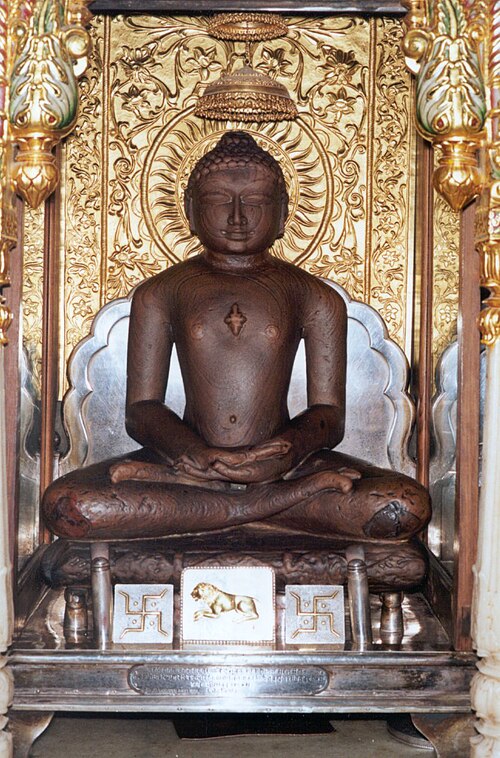
Idol of Mahavira, the 24th Tirthankara, at Shri Mahavirji temple
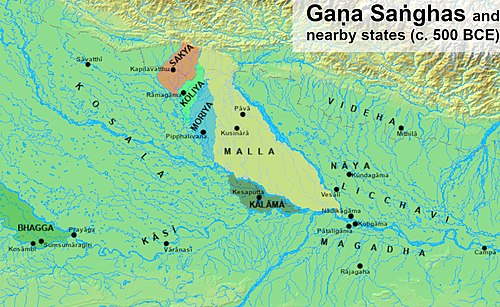
The Gaṇasaṅghas (tribal republics) at the time of Mahavira

Painting of Mahavira among the Six Heretical Teachers in Kizil Caves, Xinjiang, China, 4th century CE
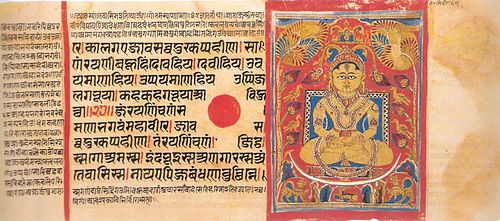
Folio from the Kalpa Sūtra, 15th century
Siddhartha of Kundagrama
Videos
Siddhartha was the father of Mahavira, the 24th Jain Tirthankara. He was a Kshatriya ruler and the Gaṇa Mukhya of the Nāya clan in Kundagrama, a suburb of Vaishali. He was married to Licchavi princess
Mahavira
…born as Marichi (the son of Bharata Chakravartin) in a previous life. Tirthankara Mahavira was born in Kundagrāma into the royal Jain family of King Siddhartha of the Nāya tribe and Queen Trishala of the Licchavi republic. The Nāyas were kshatriyas and saw themselves as being related to the Videhas. The Ācārāṅga…

Gaṇa Mukhya Siddhartha instructs his courtiers to summon astrologers to interpret the dreams of his wife Trishala, Kalpa Sutra, 1503.