Mandelʹshtam (crater)
Videos
Mandelʹshtam is the remains of a large crater on the Moon's far side. It is located within the proposed Chaplygin-Mandel’shtam Basin. Nearly attached to the northeast outer rim is the crater Papaleksi

Oblique Lunar Orbiter 1 image, at the terminator

The floor of Mandelʹshtam, showing a typical highlands scarp at right. From Apollo 16.

Oblique view from Apollo 11 of Mandelʹshtam F (below center) and the less obvious Mandelʹshtam G.

Oblique view of Mandelʹshtam R from Apollo 10.
Far side of the Moon
Videos
The far side of the Moon, also called the dark side of the Moon, is the hemisphere of the Moon that faces away from Earth; the opposite hemisphere being the near side. Due to tidal locking, the time i
Mandelʹshtam (crater)
…Mandelʹshtam is the remains of a large crater on the Moon's far side. It is located within the proposed Chaplygin-Mandel’shtam Basin. Nearly attached to the northeast outer rim is the crater Papaleksi. To the south lies…

The ground surface of the lunar far side with the Yutu-2 rover (center), captured by the Chang'e 4 lander.

Detailed view with Mare Moscoviense visible, by the Lunar Reconnaissance Orbiter (LRO)
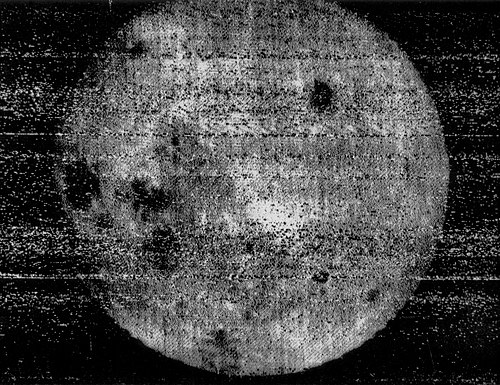
The 7 October 1959 image by Luna 3, which revealed for the first time the far side of the Moon. Clearly visible is Mare Moscoviense (top right) and a mare triplet of Mare Crisium, Mare Marginis and Mare Smythii (left center).

The far side of the Moon, with Mare Marginis and Mare Smythii visible, photographed by Apollo 16 in 1972. It is much more cratered than the near side of the Moon.