Marriage of enslaved people (United States)
Videos
Photos
Marriage of enslaved people in the United States was generally not legal before the American Civil War (1861–1865). Enslaved African Americans were considered chattel legally, and they were denied human or civil rights until the United States abolished slavery with the passage of the Thirteenth Amendment to the United States Constitution. Both state and federal laws denied, or rarely defined, rights for enslaved people.

An 1899 illustration of a broomstick wedding ceremony. Schomburg Center for Research in Black Culture, New York Public Library

Husbands, Wives, and Families sold indiscriminately to different purchasers, are violently separated-probably never to meet again, 1843, New York Public Library

Illustration of Uncle Tom and his baby from Uncle Tom's Cabin, by Harriet Beecher Stowe

Marriage of a colored soldier at Vicksburg by Chaplain Warren of the Freedmen's Bureau
Thirteenth Amendment to the United States Constitution
Videos
Photos
The Thirteenth Amendment to the United States Constitution abolished slavery and involuntary servitude, except as punishment for a crime. The amendment was passed by the Senate on April 8, 1864, by the House of Representatives on January 31, 1865, and ratified by the required 27 of the then 36 states on December 6, 1865, and proclaimed on December 18. It was the first of the three Reconstruction Amendments adopted following the American Civil War.

Abolitionist imagery focused on atrocities against slaves. (Photo of Peter, 1863.)

Abraham Lincoln
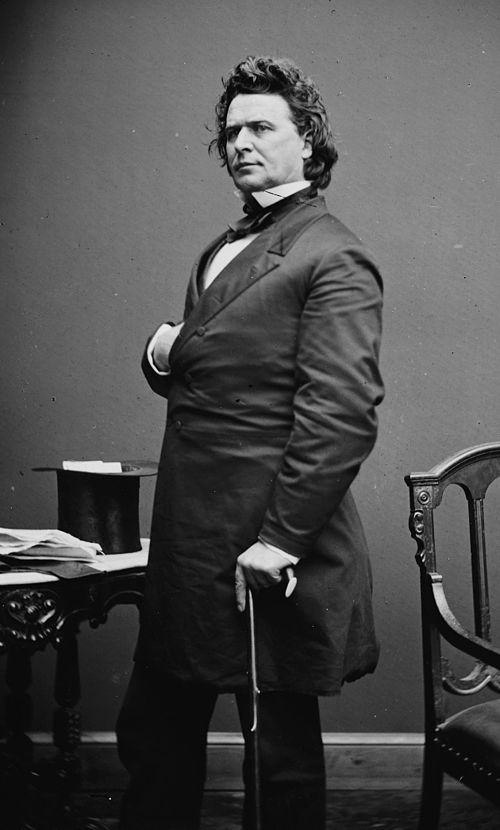
Representative James Mitchell Ashley proposed an amendment abolishing slavery in 1863.
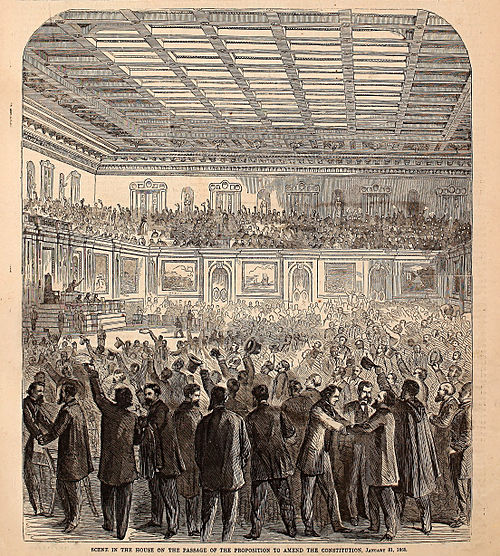
Celebration erupts after the Thirteenth Amendment is passed by the House of Representatives.