Mato-tope
Videos
Mato-tope was the second chief of the Mandan tribe to be known as "Four Bears," a name he earned after charging the Assiniboine tribe during battle with the strength of four bears. Four Bears lived in the first half of the 19th century on the upper Missouri River in what is now North Dakota. Four Bears was a favorite subject of artists, painted by George Catlin and Karl Bodmer.


Mato-tope holding a lance and wearing painted and quilled shirt: aquatint by Karl Bodmer from the book "Maximilian, Prince of Wied’s Travels in the Interior of North America, during the years 1832–1834". The shirt is made of "bighorn leather".

Mato-Tope, Adorned with the insignia of his warlike deeds.: aquatint by Karl Bodmer from the book "Maximilian, Prince of Wied’s Travels in the Interior of North America, during the years 1832–1834". The six sticks in his hair represent killing six men with a gun and the wooden knife represents he killed a Cheyenne chief with a knife. The split turkey feather is said to stand for an arrow wound. The hand on Four Bears' torso may indicate that he once seized an enemy for his comrades to kill.

Facsimile of the Robe of Mah-to-toh-pa - Mandan by George Catlin showing Mato-Tope victories
George Catlin
Videos
George Catlin was an American lawyer, painter, author, and traveler, who specialized in portraits of Native Americans in the American frontier. Traveling to the American West five times during the 1830s, Catlin wrote about and painted portraits that depicted the life of the Plains Indians. His early work included engravings, drawn from nature, of sites along the route of the Erie Canal in New York State. Several of his renderings were published in one of the first printed books to use lithography, Cadwallader D. Colden's Memoir, Prepared at the Request of a Committee of the Common Council of the City of New York, and Presented to the Mayor of the City, at the Celebration of the Completion of the New York Canals, published in 1825, with early images of the City of Buffalo.


Self-portrait, aged 28

Catlin's travels in North America between 1830 and 1855
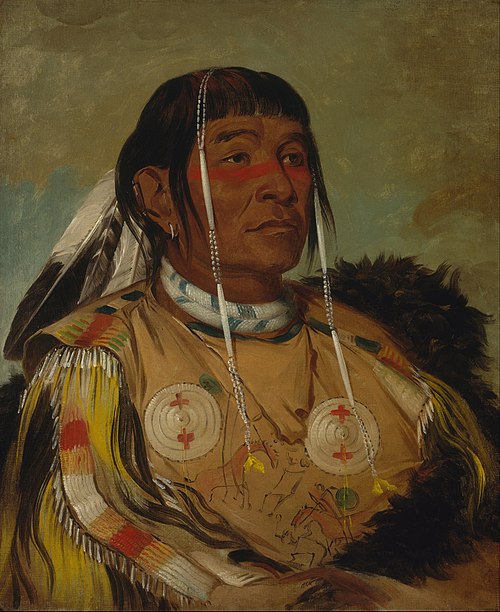
Sha-có-pay, The Six, Chief of the Plains Ojibwa, an 1832 portrait at Fort Union that is now housed in the Smithsonian American Art Museum in Washington, D.C.