Melpomene
Videos
Melpomene is the Muse of tragedy in Greek mythology. She is described as the daughter of Zeus and Mnemosyne along with the other Muses, and she is often portrayed with a tragic theatrical mask.
Roman statue of Melpomene, 2nd century AD. The muse is shown in a long-sleeved garment with a high belt, clothing that was associated with tragic actors. Her wreath of vines and grapes alludes to Dionysus, the god of the theatre


Melpomene by Joseph Fagnani (1869)

Melpomene on an antique fresco from Pompeii
Muses
Videos
In ancient Greek religion and mythology, the Muses were the inspirational goddesses of literature, science, and the arts. They were considered the source of the knowledge embodied in the poetry, lyric
Melpomene
…Melpomene (; Ancient Greek: Μελπομένη, romanized: Melpoménē, lit. 'to sing' or 'the one that is melodious') is the Muse of tragedy in Greek mythology. She is described as the daughter of Zeus and Mnemosyne (and therefore of power and memory) along with the other Muses…

Muse, perhaps Clio, reading a scroll (Attic red-figure lekythos, Boeotia, c. 430 BC)

Print of Clio, made in the 16th–17th century. Preserved in the Ghent University Library.
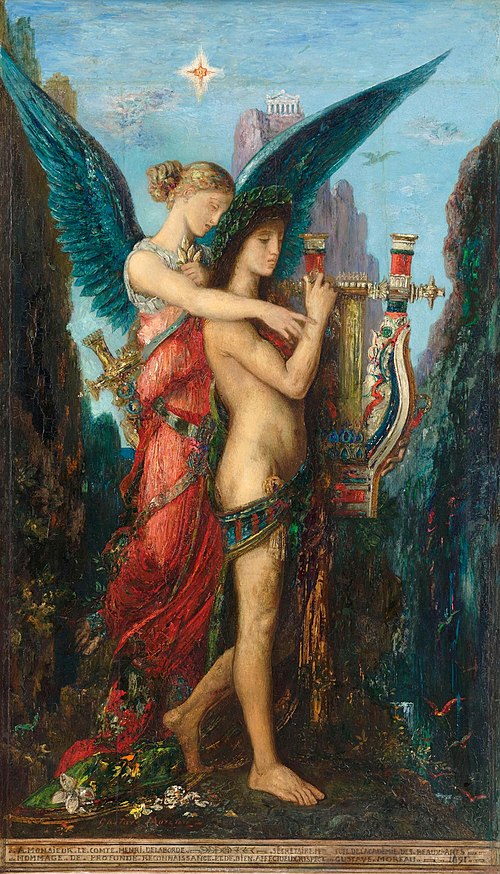
Gustave Moreau: Hesiod and the Muse (1891), Musée d'Orsay, Paris
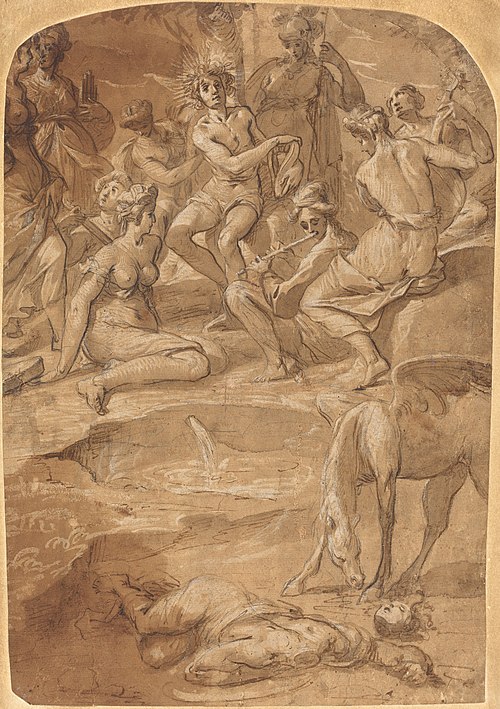
Apollo and the Muses on Mount Parnassus, c. 1650, by Johann Christoph Storer. Held at National Gallery of Art