Mercia
Videos
Mercia was an early medieval English kingdom, one of the seven kingdoms of the Anglo-Saxon period. It was centred on the River Trent and its tributaries, in a region now known as the Midlands of Engla

The Staffordshire Hoard, discovered in a field in Hammerwich, near Lichfield in July 2009, is perhaps the most important collection of Anglo-Saxon objects found in England
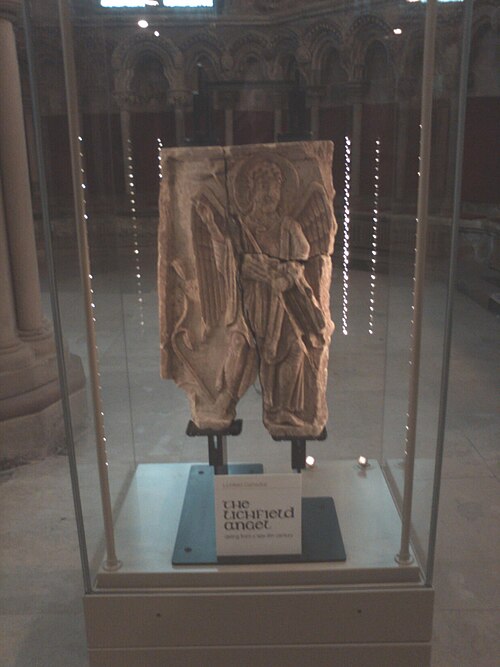
The Lichfield Angel carving

Giant Mercia flag on Tamworth castle created by community groups in 2024
Penda of Mercia
Videos
Penda was a 7th-century king of Mercia, the Anglo-Saxon kingdom in what is today the Midlands. A pagan at a time when Christianity was taking hold in many of the Anglo-Saxon kingdoms, Penda took over
Mercia
…only Anglo-Saxon Heptarchy ruling house known to claim a direct family link with a pre-migration Continental Germanic monarchy. The next Mercian king, Penda, ruled from about 626 or 633 until 655. Some of what is known about Penda comes from the hostile account of Bede, who disliked him – both as an enemy…

Stained glass window, depicting the death of Penda at the Battle of the Winwaed, Worcester Cathedral