Mestra
Videos
In Greek mythology, Mestra was a daughter of Erysichthon of Thessaly. Antoninus Liberalis called her Hypermestra and Erysichthon Aethon. According to Ovid, she was married to the thief Autolycus.

Erysichthon sells his daughter Mestra. An engraving from among Johann Wilhelm Baur's illustrations of Ovid's Metamorphoses. Poseidon can be seen in the lower-right background.
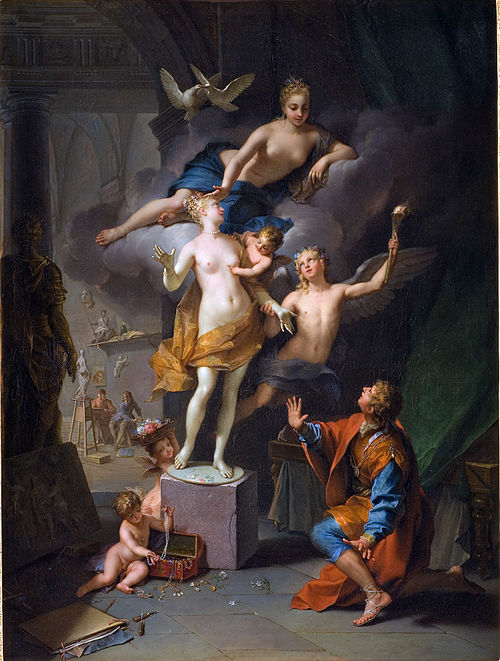
Pygmalion
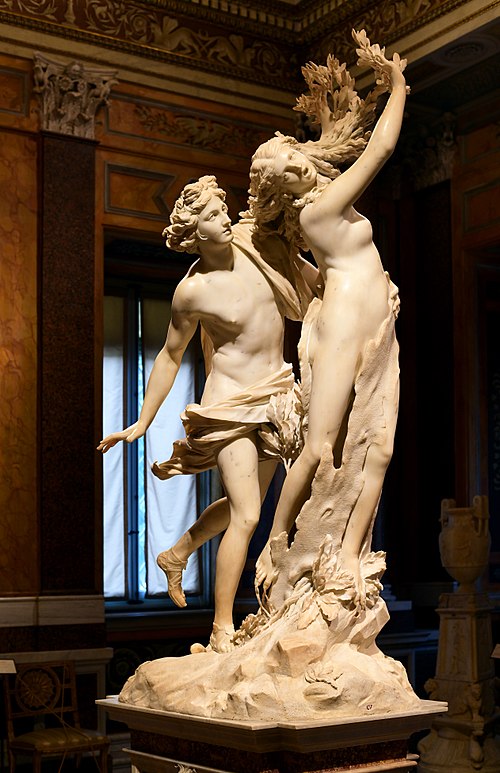
Apollo and Daphne

Io changed into a cow, Mercury cuts of Argus's head
Catalogue of Women
Videos
The Catalogue of Women —also known as the Ehoiai —is a fragmentary Greek epic poem that was attributed to Hesiod during antiquity. The "women" of the title were in fact heroines, many of whom lay with
Mestra
…providing her father with the proceeds to buy more food. In the end, driven by his relentless hunger, Erysichthon eats himself to death. In Hesiod's Catalogue of Women, rather than selling her into slavery, Erysichthon would repeatedly sell his daughter to suitors for the bride prices they would pay. Sisyphus also…

A papyrus fragment containing the beginning of the Atlantid Electra's family from book 3 or 4 (Cat. fr. 177 = P.Oxy. XI 1359 fr. 2, second century CE, Oxyrhynchus)

Louis Billotey's Iphigénie (1935) depicting Iphigenia (center) in embrace with Clytemnestra, with Artemis gazing at the girl. In Euripides' Iphigeneia in Aulis, Iphigeneia was turned into a deer to save her from being sacrificed so that the Achaean fleet could sail for Troy. In the Catalogue, the goddess saved Iphigenia (called Iphimede) and enfranchised her as "Artemis Enodia", or Hecate.

The beginning of the Atalanta-Ehoie (Cat. fr. 73. 1–7 = P.Lit.Lond. 32, third century BC, Gurob)