Metrosideros robusta
Videos
Metrosideros robusta, commonly known as the northern rātā, is a forest tree endemic to New Zealand. It grows up to 25 metres or taller, and usually begins its life as a hemiepiphyte high in the branch

Kaitoke Tree

The leaves of northern rātā have a distinct notch at the tip.

Rātā flowers at Mt Maungatautari
Rangitoto Island
Videos
Rangitoto Island is a volcanic island in the Hauraki Gulf near Auckland, New Zealand. The 5.5 km wide island is a symmetrical shield volcano cone capped by central scoria cones, reaching a height of 2
Metrosideros robusta
…as M. robusta 'Tane's Gold' by Duncan & Davies in 1996 and M. robusta 'Twistie'. M. robusta 'Rangitoto Island' – Crimson Graeme Platt Sourced from Rangitoto Island. M. ×sub-tomentosa 'Hauparapara'¤ Late 1980s Dull orange-red Graeme Platt Sourced from Hauparapara River in the Bay of Plenty. M. ×sub-tomentosa…

Oblique aerial of Rangitoto Volcano from the south
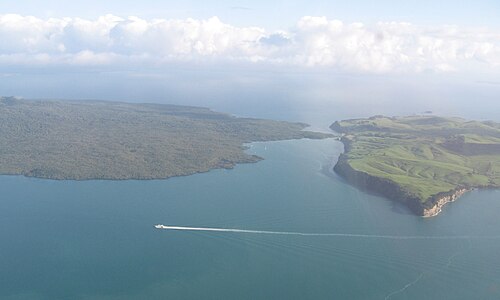
The thin land bridge link between Rangitoto Island (left) and Motutapu Island is visible here from the air

The opening to a lava tube at Rangitoto, partially obstructed by tree growth

View from inside one of the caves