Microchess
Videos
Photos
Microchess, sometimes written as MicroChess, is a chess program developed for the MOS Technology KIM-1 microcomputer by Peter R. Jennings in 1976, and published by his company Micro-Ware. The game plays chess against the human player at a beginner level, with the player entering moves via a keyboard and the computer responding, both in a custom chess notation. The game was ported to many other microcomputers such as the TRS-80, Apple II, Commodore PET and Atari 8-bit family computers by Micro-Ware and its successor company Personal Software between 1976 and 1980, with later versions featuring graphics and more levels of play. A dedicated hardware version of the game called ChessMate was produced by Commodore International in 1978, and the game's engine was licensed to Novag for its dedicated Chess Champion Mk II chess computer in 1979.

Microchess on a KIM-1 microcomputer

Graphical Microchess 1.5 on a TRS-80 microcomputer
Computer chess
Videos
Photos
Computer chess includes both hardware and software capable of playing chess. Computer chess provides opportunities for players to practice even in the absence of human opponents, and also provides opportunities for analysis, entertainment and training. Computer chess applications that play at the level of a chess grandmaster or higher are available on hardware from supercomputers to smart phones. Standalone chess-playing machines are also available. Stockfish, Leela Chess Zero, GNU Chess, Fruit, and other free open source applications are available for various platforms.

1990s pressure-sensory chess computer with LCD screen

Computer chess IC bearing the name of developer Frans Morsch (see Mephisto)
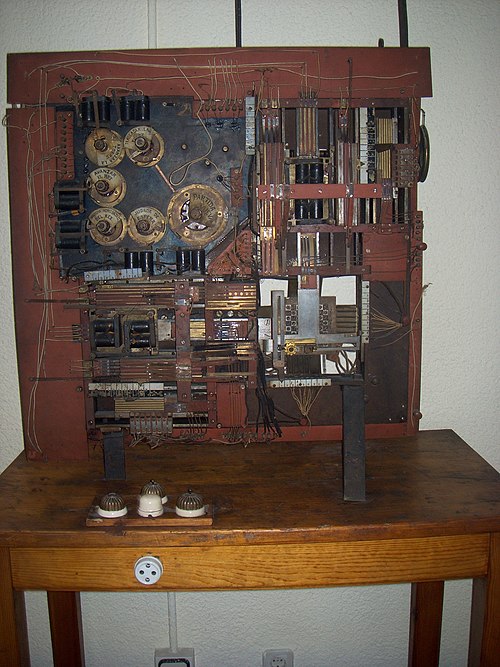
El Ajedrecista

Released in 1977, Boris was one of the first chess computers to be widely marketed. It ran on a Fairchild F8 8-bit microprocessor with only 2.5 KiB ROM and 256 byte RAM.