Microwave transmission
Videos
Microwave transmission is the transmission of information by electromagnetic waves with wavelengths in the microwave frequency range of 300 MHz to 300 GHz of the electromagnetic spectrum. Microwave si
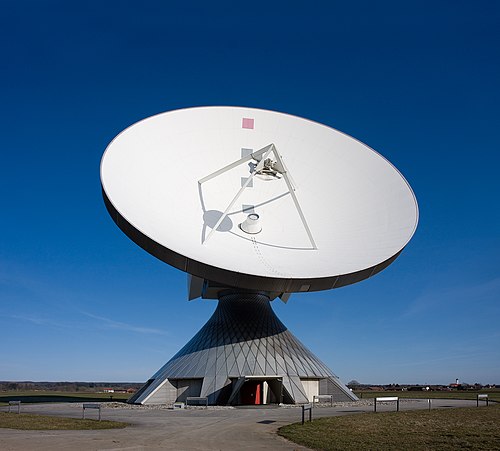
A parabolic satellite antenna for Erdfunkstelle Raisting, based in Raisting, Bavaria, Germany

C-band horn-reflector antennas on the roof of a telephone switching center in Seattle, Washington, part of the U.S. AT&T Long Lines microwave relay network

Dozens of microwave dishes on the Heinrich-Hertz-Turm in Hamburg, Germany
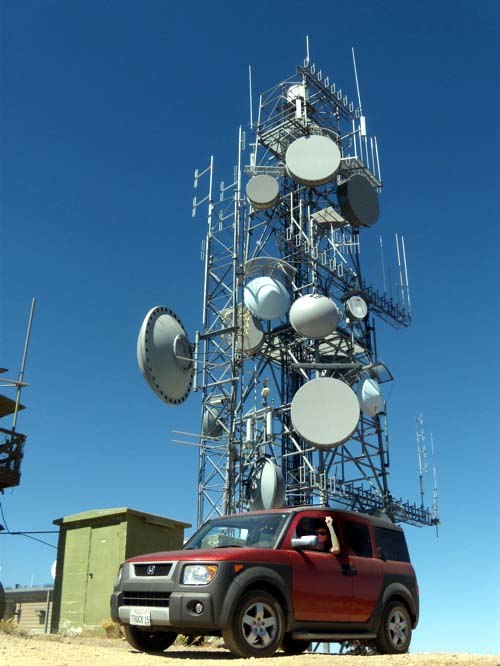
Communications tower on Frazier Mountain, Southern California with microwave relay dishes
Microwave
Videos
Microwave is a form of electromagnetic radiation with wavelengths shorter than other radio waves but longer than infrared waves. Its wavelength ranges from about one meter to one millimeter, correspon
Microwave transmission
…Microwave transmission is the transmission of information by electromagnetic waves with wavelengths in the microwave frequency range of 300 MHz to 300 GHz (1 m - 1 mm wavelength) of the electromagnetic spectrum. Microwave signals are normally limited to the line of…

Waveguide is used to carry microwaves. Example of waveguides and a diplexer in an air traffic control radar.

Disassembled radar speed gun. The grey assembly attached to the end of the copper-colored horn antenna is the Gunn diode which generates the microwaves.

The parabolic antenna (lower curved surface) of an ASR-9 airport surveillance radar which radiates a narrow vertical fan-shaped beam of 2.7–2.9 GHz (S band) microwaves to locate aircraft in the airspace surrounding an airport