Miller & Richard
Videos
Miller & Richard was a type foundry based in Edinburgh that designed and manufactured metal type. It operated from 1809 to 1952.

A specimen newspaper printed using Miller & Richard typefaces.
Caslon
Videos
Caslon is the name given to serif typefaces designed by William Caslon I in London, or inspired by his work.
Miller & Richard
…of designs of the foundry was a "modernised old face" known as Old Style - an adaptation of the old-style serif fonts of the 1500-1800 period such as Caslon, but regularised to match the greater evenness and grace expected in fonts by the mid-nineteenth century. (Bookman Old Style is an extremely distant…

William Caslon in an engraved portrait by John Faber the younger
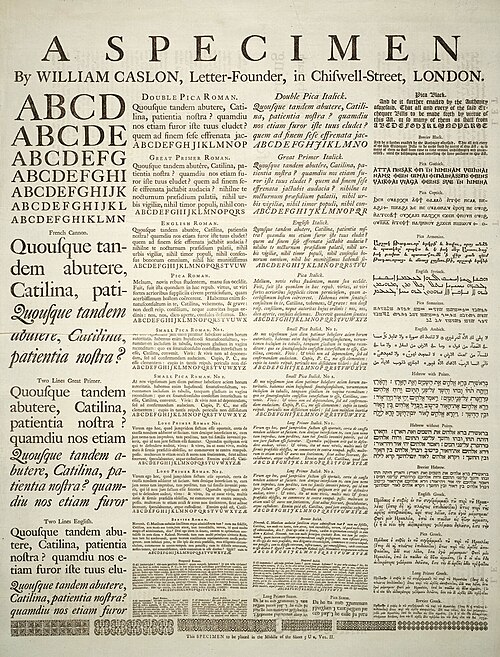
William Caslon's specimen sheet (dated 1734 but actually issued from 1738 onwards). Some of the types shown were not cut by Caslon, most notably the French Canon roman (probably cut by Joseph Moxon).

The Fry type foundry's imitations of first Baskerville (above) and then Caslon type (below), shown in a specimen attached to an edition of The Printer's Grammar, 1787. Mosley describes them as "a very close copy that is not easy to tell from the original."
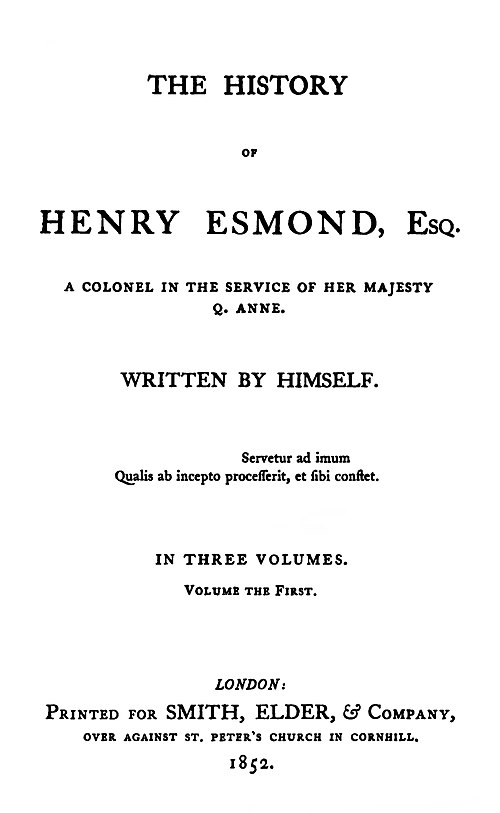
The History of Henry Esmond, a novel by Thackeray written as a fictional memoir. The first edition, of 1852, was printed in Caslon type, then just coming back into fashion. The goal was to achieve a period feel appropriate to its early eighteenth-century setting.