Mineral
Videos
In geology and mineralogy, a mineral or mineral species is, broadly speaking, a solid substance with a fairly well-defined chemical composition and a specific crystal structure that occurs naturally i

Crystals of serandite, natrolite, analcime, and aegirine from Mont Saint-Hilaire, Quebec, Canada
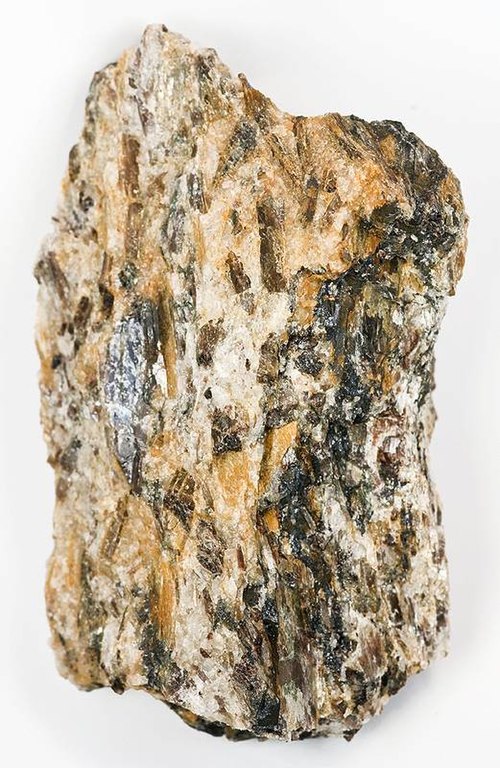
Schist is a metamorphic rock characterized by an abundance of platy minerals. In this example, the rock has prominent sillimanite porphyroblasts as large as 3 cm (1.2 in).
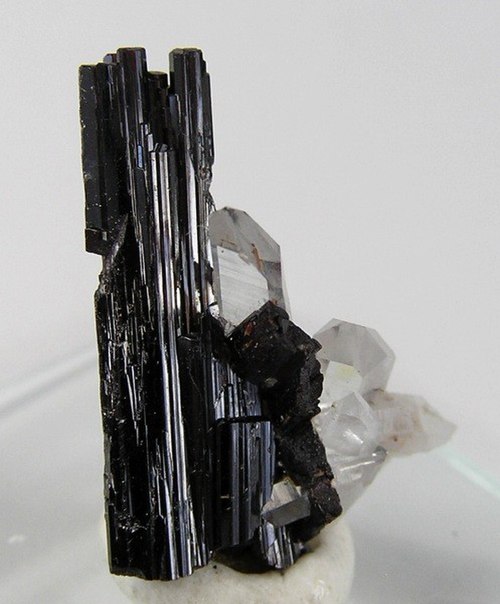
Hübnerite, the manganese-rich end-member of the wolframite series, with minor quartz in the background

When minerals react, the products will sometimes assume the shape of the reagent; the product mineral is termed a pseudomorph of (or after) the reagent. Illustrated here is a pseudomorph of kaolinite after orthoclase. Here, the pseudomorph preserved the Carlsbad twinning common in orthoclase.
Rock (geology)
Videos
In geology, a rock is any naturally occurring solid mass or aggregate of minerals or mineraloid matter. It is categorized by the minerals included, its chemical composition, and the way in which it is
Mineral
…Moreover, living organisms often synthesize inorganic minerals (such as hydroxylapatite) that also occur in rocks. The concept of mineral is distinct from rock, which is any bulk solid geologic material that is relatively homogeneous at a large enough scale. A rock may consist of one type of mineral or may be…

The Grand Canyon, an incision through layers of sedimentary rocks.

A balancing rock called Kummakivi (literally "strange stone")
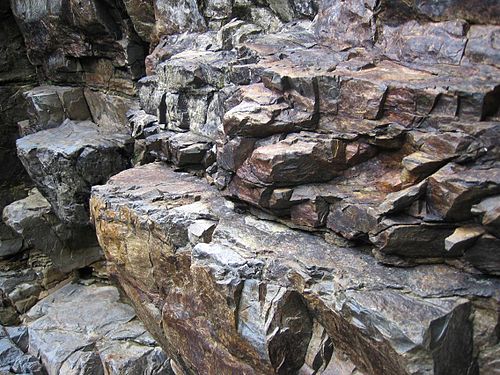
Rock outcrop along a mountain creek near Orosí, Costa Rica.

Sample of igneous gabbro