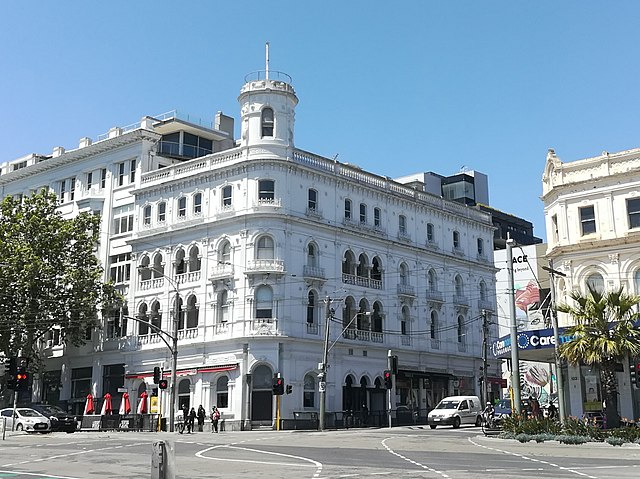
Missing Link Records was an Australian-based independent record label established in 1977. The Missing Link label was created by Keith Glass and David Pepperell who were the owners of a Melbourne record store of the same name. The name was taken from a 1960s Australian rock band, The Missing Links. The label's initial releases were two retrospective 7-inch singles, "The Ultimate Garage Band" by The Union and "Living in the 60's" by Cam-Pact, both of which band from the 1960s that the owners had respectively performed with. Following a few more releases Pepperell departed and the label took on a new contemporary release program to reflect the punk-new wave movement of the late 1970s. According to rock music historian, Ian McFarlane, "[it] was a cornerstone organisation on Melbourne's independent scene of the late 1970s". The label became influential through the release of both Australian and overseas material, scoring a top 20 hit single with the local release of The Flying Lizards kitchen electronic version of "Money" (1979), when it was passed over by Festival Records.

Missing Link Records
The Birthday Party (band)
The Birthday Party were an Australian post-punk band, active from 1977 to 1983. The group's "bleak and noisy soundscapes," which drew irreverently on blues, free jazz, and rockabilly, provided the setting for vocalist Nick Cave's disturbing tales of violence and perversion. Their 1981 single "Release the Bats" was particularly influential on the emerging gothic scene. Despite limited commercial success, The Birthday Party's influence has been far-reaching, and they have been called "one of the darkest and most challenging post-punk groups to emerge in the early '80s."
Photograph circa 1982, from left: Harvey, Cave, Calvert, Pew, Howard (cover image of John Peel Sessions CD, 2001)
The Birthday Party were regulars at Melbourne's Crystal Ballroom, playing their final show there in 1983.