Mohawk people
Videos
The Mohawk, also known by their own name, Kanien'keháka, are an Indigenous people of North America and the easternmost nation of the Haudenosaunee, or Iroquois Confederacy.
Painting of Thayendanegea or Joseph Brant, by Gilbert Stuart (1786)


Kanienʼkehá꞉ka dancer at a powwow in 2015

Contemporary Quebec Kanienʼkehá꞉ka person performing a hoop dance at Wikimania 2017
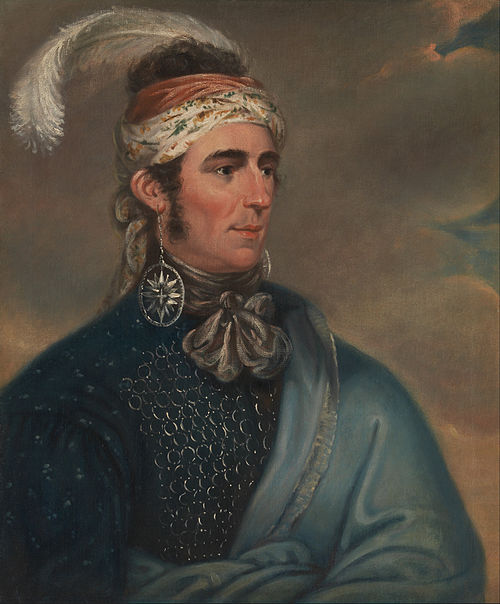
Teyoninhokovrawen (John Norton) played a prominent role in the War of 1812, leading Haudenosaunee warriors from Grand River into battle against Americans. Norton was part Cherokee and part Scottish.
Mohicans
Videos
The Mohicans or Mahicans are an Indigenous people of the Northeastern Woodlands who spoke an Eastern Algonquian language. Historically, they were based in Upstate New York. Today, they are enrolled in
Mohawk people
…needed their flint for tool making. Their Algonquian-speaking neighbors (and competitors), the people of Muh-heck Haeek Ing ("food area place"), the Mohicans, referred to the people of Kanièn꞉ke as Maw Unk Lin, meaning "bear people". The Dutch heard and wrote this term as Mohawk, and also referred to the…

Land deed, 31 May 1664, Willem Hoffmeyer purchase of 3 islands in the Hudson River near Troy from three native Mohicans – Albany Institute of History and Art

The Mohican chief Etow Oh Koam, referred to as one of the Four Mohawk Kings in a state visit to Queen Anne in 1710. By John Simon, c. 1750.

Von Ewald sketch of a Stockbridge Militia warrior who fought on the Patriot side in the Continental Army during the American Revolutionary War