Monergism
Videos
In Christian theology, monergism primarily denotes the belief that God alone is the agent of human salvation. Divine monergism is most commonly associated with Augustinian, Lutheran and Reformed/Calvi
Augustine presents Lydia of Thyatira as an example of monergistic salvation.


An illustration of Article XVIII ('Of Free Will') of the Augsburg Confession.
Martin Luther
Videos
Martin Luther was a German priest, theologian, author, hymnwriter, professor, and former Augustinian friar. Luther was the seminal figure of the Protestant Reformation, and his theological beliefs for
Monergism
…direct divine action during a man's life, remaining external to him. Consequently, theologians generally associate this position with human monergism. Martin Luther (1483–1546) limited monergism strictly to soteriological aspects. He asserted that monergism applied to both election (to salvation) and reprobation…
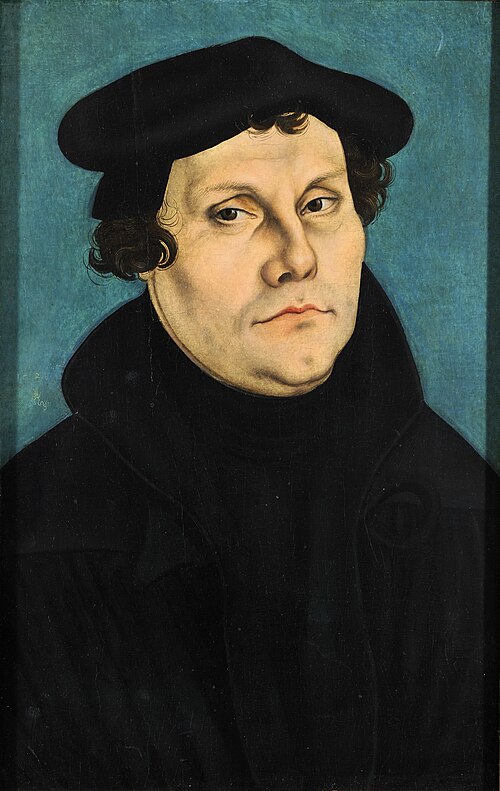
Portrait of Martin Luther, 1528

Portraits of Luther's parents, Hans and Margarethe Luther, by Lucas Cranach the Elder in 1527

In July 1505, Luther entered St. Augustine's Monastery in Erfurt

Luther's residence at the University of Wittenberg, where he began teaching theology in 1508