Mongol invasions of Japan
Videos
Major military efforts were taken by Kublai Khan of the Yuan dynasty in 1274 and 1281 to conquer the Japanese archipelago after the submission of the Korean kingdom of Goryeo to vassaldom. Ultimately

Mongol invasions of Japan in 1274 and 1281

Letter from Kublai Khan of the "Great Mongol State" (大蒙古國) to the "King of Japan" (日本國王), written in Classical Chinese, the lingua franca in East Asia at the time, dated 8th Month, 1266. Now stored in Tōdai-ji, Nara, Japan.

Samurai Mitsui Sukenaga (right) defeating the Mongolian invasion army (left)

The Mongol fleet destroyed in a typhoon, ink and water on paper, by Kikuchi Yōsai, 1847
Kamakura shogunate
Videos
The Kamakura shogunate was the feudal military government of Japan during the Kamakura period from 1185 to 1333.
Mongol invasions of Japan
…then ruled by the Shikken (shogunate regents) of the Hōjō clan, who had intermarried with and wrested control from Minamoto no Yoriie, shōgun of the Kamakura shogunate, after his death in 1203. The inner circle of the Hōjō clan had become so pre-eminent that they no longer consulted the council of the shogunate (Hyōjō…

A wooden Kongorikishi (Nio) created during the 14th-century at a temple in Sakai, Osaka

Grave of Minamoto no Yoritomo

Site of Hōjō Takatoki's death
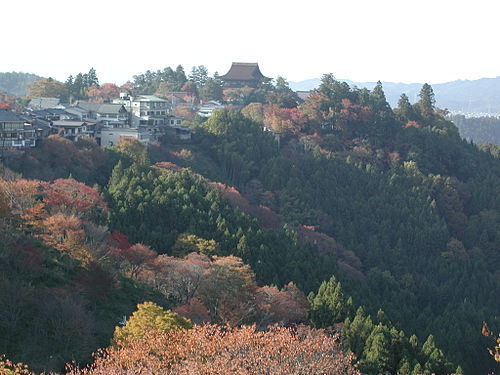
Kouyou of Yoshinoyama