Mos maiorum
Videos
The mos maiorum is the unwritten code from which the ancient Romans derived their social norms. It is the core concept of Roman traditionalism, distinguished from but in dynamic complement to written

The Roman family was one of the ways that the mos maiorum was passed along through the generations.
Religion in ancient Rome
Videos
Religion in ancient Rome was polytheistic, consisted of varying imperial and provincial religious practices, which were followed both by the Roman people as well as those who were brought under its ru
Mos maiorum
…maiorum, and the early Christian poet Prudentius dismissed the conservative adherence to native Roman traditions as "the superstition of old grandpas" (superstitio veterum avorum) and inferior to the new revealed truth of Christianity. After the final collapse of the Western Roman Empire in 476 AD and ascension…
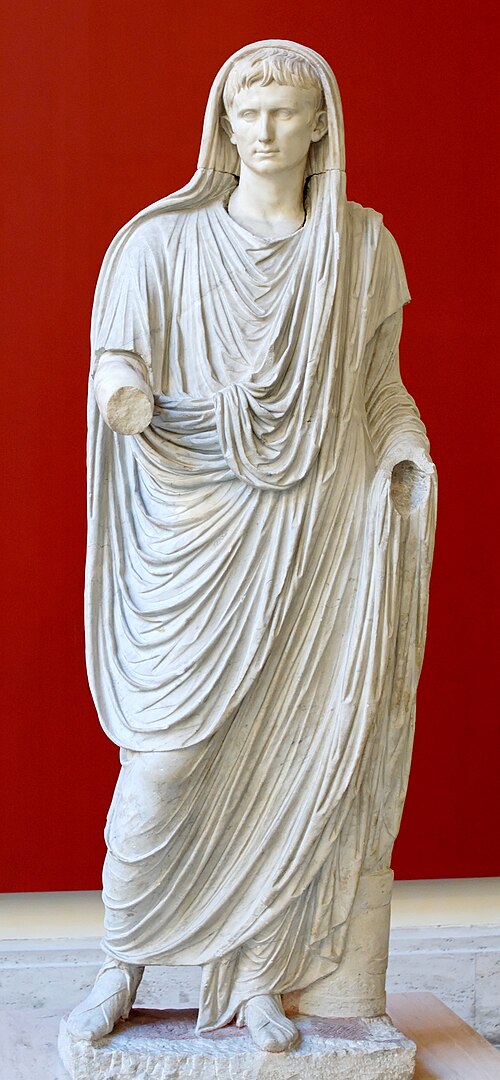
Augustus as Pontifex Maximus (Via Labicana Augustus)

Cybele enthroned, with lion, cornucopia and Mural crown. Roman marble, c. 50 AD (Getty Museum)

Pompeian fresco; Iapyx removing an arrowhead from Aeneas' thigh, watched by Venus Velificans (veiled)

Aeneas urged by the Penates to continue his journey to found Rome (4th century AD illustration)