NK-33
Videos
The NK-33 and its vacuum-optimized variant, the NK-43, were rocket engines developed in the late 1960s and early 1970s by the Kuznetsov Design Bureau for the Soviet space program's ill-fated N1 Moon r
The Russian NK-33 was modified and renamed the AJ26-58 by Aerojet. This AJ26-58 is shown on the test stand at John C. Stennis Space Center.


NASA Administrator Charles Bolden (left) and Stennis Space Center Director Patrick Scheuermann view a test firing of the first Aerojet AJ26 engine.

An Antares 100 rocket being rolled out for testing, showing the two NK-33 engines

A Soyuz-2.1v rocket being rolled out to the launch pad, showing its single NK-33 engine
N1 (rocket)
Videos
The N1 was a super heavy-lift launch vehicle of the Soviet space program intended for crewed travel to the Moon and beyond. All four launch attempts between 1969 and 1972 failed. Studied and designed
NK-33
…the NK-43, were rocket engines developed in the late 1960s and early 1970s by the Kuznetsov Design Bureau for the Soviet space program's ill-fated N1 Moon rocket. The NK-33 is among the most powerful LOX/RP-1 powered rocket engines ever built, noted for its high specific impulse and low structural…

Mockup at the Baikonur Cosmodrome in late 1967
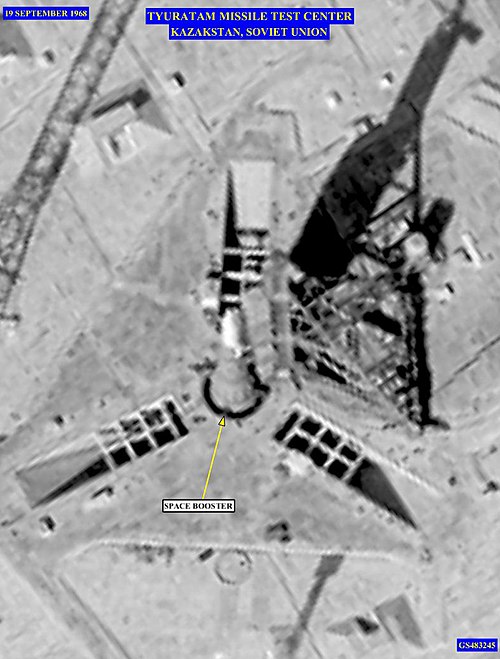
N1 imaged by US KH-8 Gambit reconnaissance satellite, 19 September 1968
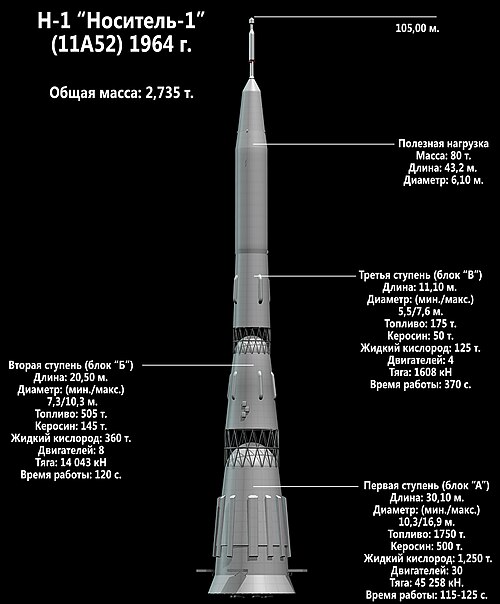
Scheme of the rocket stages (in Russian)
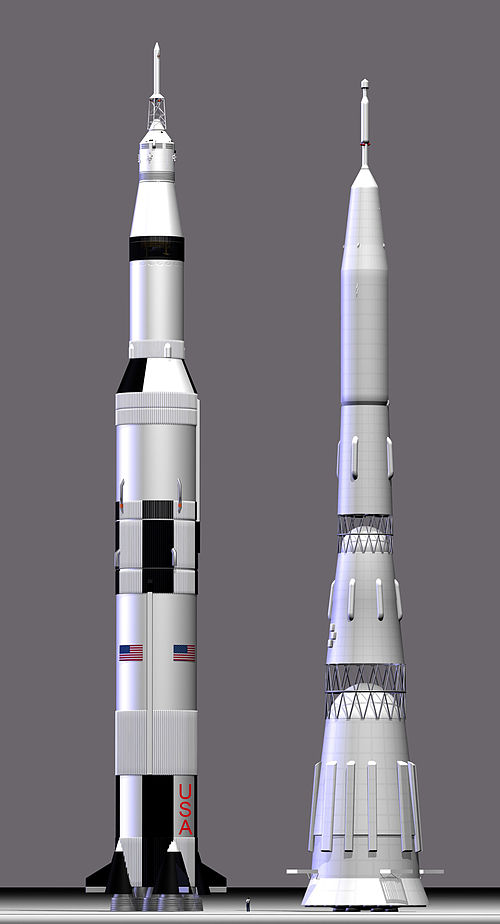
A comparison of the US Saturn V rocket (left) with the Soviet N1/L3. Note: human at bottom illustrates scale