Naram-Sin of Akkad
Videos
Naram-Sin, also transcribed Narām-Sîn or Naram-Suen, was a ruler of the Akkad, who reigned c. 2255–2218 BC, and was the third successor and grandson of King Sargon of Akkad. Under Naram-Sin, the kingd
Portrait of Naram-Sin


Victory stele of Naram-Sin

Terracotta brick stamp of Naram-Sin (Naram-Suen). Ancient Orient Museum, Istanbul.

Bassetki Statue, 23rd century BC, from Bassetki, Iraq. Iraq Museum.
Akkadian Empire
Videos
The Akkadian Empire or the Kingdom of Akkad/Agade was an ancient kingdom established around 2334 BCE, and the first empire in world history, succeeding the long-lived city-states of Sumer. Centered on
Naram-Sin of Akkad
…𒀭𒈾𒊏𒄠𒀭𒂗𒍪: DNa-ra-am DSîn, meaning "Beloved of the Moon God Sîn", the "𒀭" a determinative marking the name of a god; died c. 2218 BC), was a ruler of the Akkad, who reigned c. 2255–2218 BC (middle chronology), and was the third successor and grandson of King Sargon of Akkad. Under Naram-Sin, the kingdom reached…

Bronze head of an Akkadian ruler, discovered in Nineveh in 1931, presumably depicting either Sargon or, more probably, Sargon's grandson Naram-Sin.

Sargon on his victory stele, with a royal hair bun, holding a mace and wearing a flounced royal coat on his left shoulder with a large belt (left), followed by an attendant holding a royal umbrella. The name of Sargon in cuneiform ("King Sargon") appears faintly in front of his face. Louvre Museum.
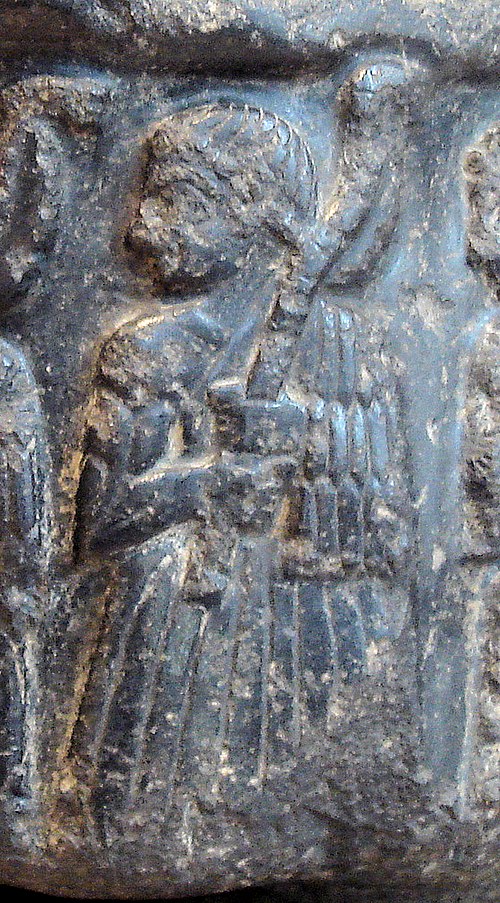
Akkadian official in the retinue of Sargon of Akkad, holding an axe

Prisoners escorted by a soldier, on a victory stele of Sargon of Akkad, circa 2300 BC. The hairstyle of the prisoners (curly hair on top and short hair on the sides) is characteristic of Sumerians, as also seen on the Standard of Ur. Louvre Museum.