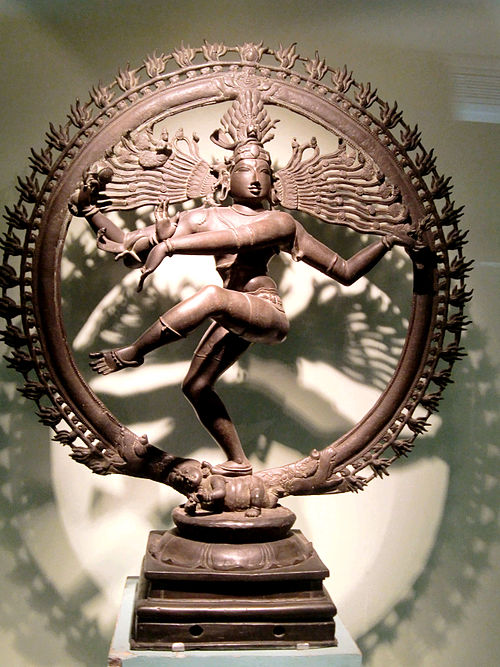
Nataraja Temple, Chidambaram
Thillai Nataraja Temple, also referred as the Chidambaram Nataraja Temple, is a Hindu temple dedicated to Nataraja, the form of Shiva as the lord of dance. This temple is located in Chidambaram, Tamil Nadu, India. This temple has ancient roots and a Shiva shrine existed at the site when the town was known as Thillai. Chidambaram, the name of the city literally means "stage of consciousness". The temple architecture symbolizes the connection between the arts and spirituality, creative activity and the divine. The temple wall carvings display all the 108 karanas from the Natya Shastra by Bharata Muni, and these postures form a foundation of Bharatanatyam, an Indian classical dance.
A view of north-side gopuram and pond of the temple
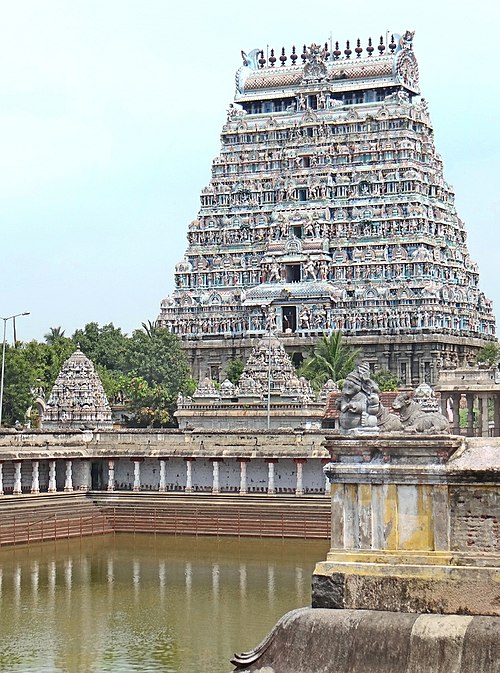
The main gopuram of Chidambaram Natarajar temple
Sivaganga pool and gopuram, ca. 1800-1850.
Nataraja – Shiva as the cosmic dancer, inspired the 10th-century Chola kings to rebuild the Chidambaram temple with stone and gold. A silver Nataraja, not Shivalinga, is the principal icon in this temple.
Nataraja, also known as Adalvallan, is a depiction of Shiva, one of the main deities in Hinduism, as the divine cosmic dancer. His dance is called the tandava. The pose and artwork are described in many Hindu texts such as the Tevaram and Thiruvasagam in Tamil and the Amshumadagama and Uttarakamika agama in Sanskrit and the Grantha texts. The dance murti featured in all major Hindu temples of Shaivism, and is a well-known sculptural symbol in India and popularly used as a symbol of Indian culture, as one of the finest illustrations of Hindu art. This form is also referred to as Kuththan, Sabesan, and Ambalavanan in various Tamil texts.
A 10th-century Chola dynasty bronze sculpture of Shiva, the Lord of the Dance at the Los Angeles County Museum of Art
Chola bronze, Tamil Nadu, 10th or 11th century.
Detail of Chola bronze
6th/7th century Nataraja in Cave 1 of Badami cave temples