The National Maritime Museum is a maritime museum in Greenwich, London. It is part of Royal Museums Greenwich, a network of museums in the Maritime Greenwich World Heritage Site. Like other publicly f
The museum's main entrance
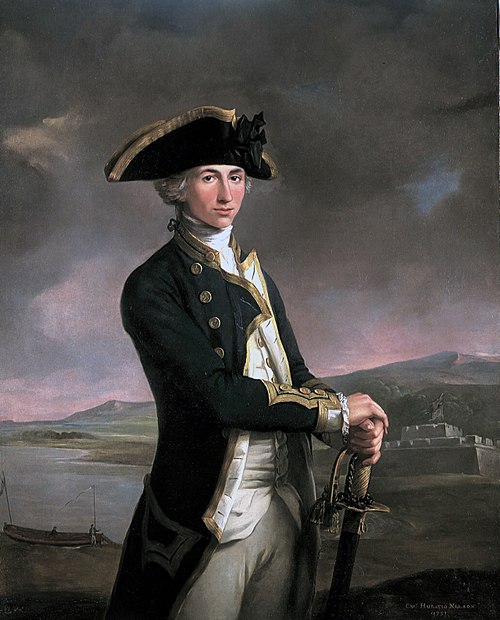
Captain Horatio Nelson by John Francis Rigaud, with Fort San Juan—the site of his most notable early achievement—in the background (Sugden, Nelson: A Dream of Glory, p. 464).
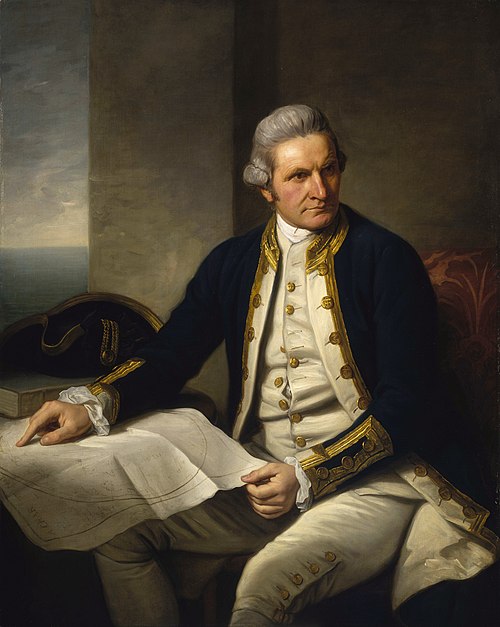
Portrait of Captain James Cook by Nathaniel Dance at the National Maritime Museum
The Bretagne, painting by Jules Achille Noël, 1859, at the National Maritime Museum
The Royal Observatory, Greenwich is an observatory situated on a hill in Greenwich Park in south east London, overlooking the River Thames to the north. It played a major role in the history of astron
National Maritime Museum
…and navigation. It was a landing place for the Romans, Henry VIII lived here, the Royal Navy has roots on the waterfront, and Charles II founded the Royal Observatory in 1675 for "finding the longitude of places". The home of Greenwich Mean Time and the Prime Meridian since 1884, Greenwich has long been a centre for…
Royal Observatory, Greenwich. A time ball sits atop the Octagon Room.
The Airy Transit Circle at the Royal Observatory, Greenwich, used for over a century (1851–1953) as the reference point when charting the heavens and determining times, thus earning for it the epithet "the centre of time and space"
The building housing the origin of the Greenwich Prime Meridian, marked by the brass strip in the foreground. The apex of the roof opens up to the left above the white vertical strips (joints in the eaves are visible), enabling telescopic star sightings to be made.
The Shepherd Gate Clock at the gates of the Royal Greenwich Observatory. This clock shows Greenwich Mean Time all year round, ie. it is not set to British Summer Time in the summer.