Natural history
Videos
Natural history is a domain of inquiry involving organisms, including animals, fungi, and plants, in their natural environment, leaning more towards observational than experimental methods of study. A
Black and white tables of natural history, from Ephraim Chambers's 1728 Cyclopaedia.


A natural history collection in a French public secondary school
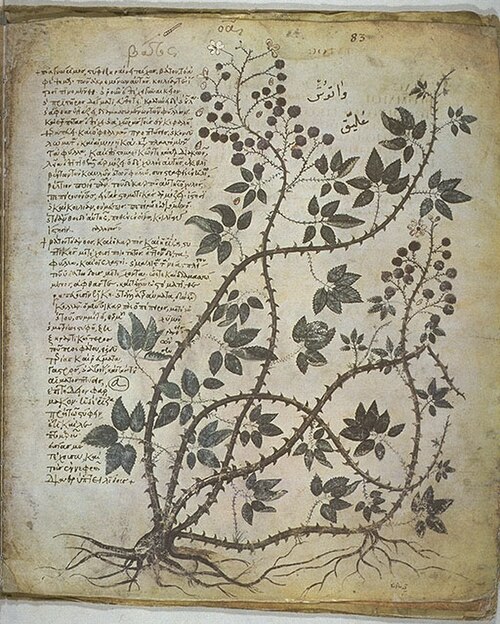
Blackberry from the sixth-century Vienna Dioscurides manuscript

Georges Buffon is best remembered for his Histoire naturelle, a 44-volume encyclopedia describing quadrupeds, birds, minerals, and some science and technology. Reptiles and fish were covered in supplements by Bernard Germain de Lacépède.
Pliny the Elder
Videos
Gaius Plinius Secundus, known in English as Pliny the Elder, was a Roman author, naturalist, scientist, naval and army commander of the early Roman Empire, procurator, and friend of the emperor Vespas
Natural history
…also History below). In antiquity, "natural history" covered essentially anything connected with nature, or used materials drawn from nature, such as Pliny the Elder's encyclopedia of this title, published c. 77 to 79 AD, which covers astronomy, geography, humans and their technology, medicine, and superstition, as…

19th-century portrait of Pliny the Elder

One of the Xanten Horse-Phalerae located in the British Museum, measuring 10.5 cm (4.1 in). It bears an inscription formed from punched dots: PLINIO PRAEF EQ; i.e., Plinio praefecto equitum, "Pliny prefect of cavalry". It was perhaps issued to every man in Pliny's unit. The figure is the bust of the emperor.

City and Lake of Como, painted by Jean-Baptiste-Camille Corot, 1834

Colossal head of Titus, son of Vespasian. Glyptothek, Munich