Natural science
Videos
Natural science or empirical science is a branch of science concerned with the description, understanding, and prediction of natural phenomena, based on empirical evidence from observation and experim
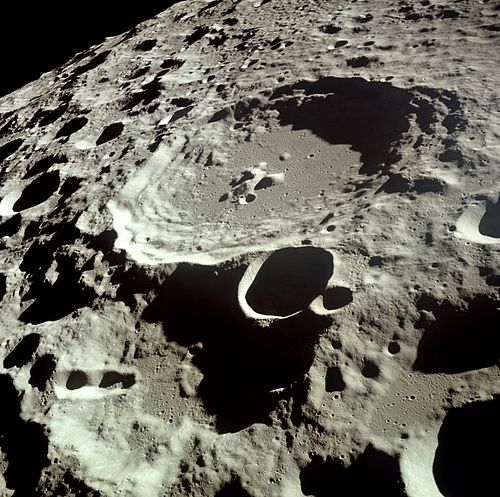
Uncrewed and crewed spacecraft missions have been used to image distant locations within the Solar System, such as this Apollo 11 view of Daedalus crater on the far side of the Moon.

Onion (Allium) cells in different phases of the cell cycle. Growth in an 'organism' is carefully controlled by regulating the cell cycle.

Plato (left) and Aristotle in a 1509 painting by Raphael. Plato rejected inquiry into natural philosophy as against religion, while his student, Aristotle, created a body of work on the natural world that influenced generations of scholars.
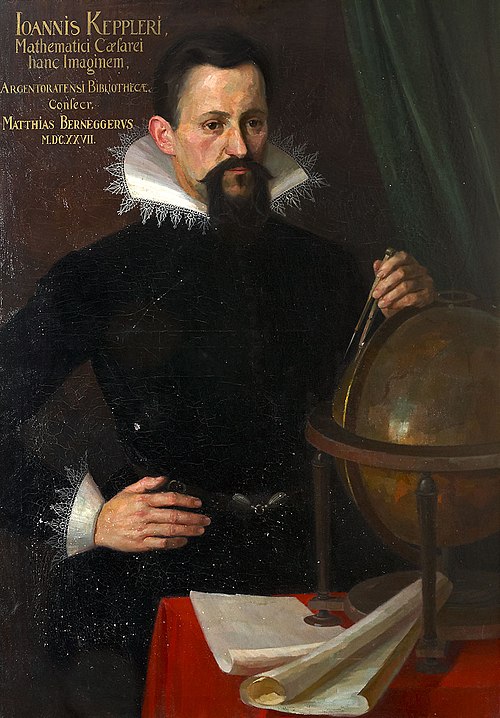
Johannes Kepler (1571–1630). Kepler's Astronomia Nova is "the first published account wherein a scientist documents how he has coped with the multitude of imperfect data to forge a theory of surpassing accuracy", therefore laying the groundwork for the scientific method.
Astronomy
Videos
Astronomy is a natural science that studies celestial objects and the phenomena that occur in the cosmos. It uses mathematics, physics, and chemistry to explain their origin and their overall evolutio
Natural science
…into two main branches: life science and physical science. Life science is alternatively known as biology. Physical science is subdivided into physics, astronomy, Earth science, and chemistry. These branches of natural science may be further divided into more specialized branches, also known as fields. As empirical…

Megaliths from Nabta Playa, constructed by Neolithic populations, located in Aswan, Upper Egypt.

The Nebra sky disc found on Mittenberg hill in Germany and dated to c. 1800–1600 BCE.

A Babylonian planisphere (7th century BCE) was an early astronomical instrument. Its use of sexagesimals (e.g. 12, 24, 60, 360) is still being used today through having been broadly adopted for timekeeping and astrometry.

Portrait of Alfraganus in the Compilatio astronomica, 1493. Islamic astronomers collected and translated Indian, Persian and Greek texts, adding their own work.