Neo-Confucianism
Videos
Neo-Confucianism is the cultural revival of Confucianism as an ethical, social, and religious system, which dominated Chinese philosophy from the 13th through the 19th century. Although its origin lie

Bronze statue of Zhou Dunyi in White Deer Grotto Academy

Portrait of Cho Kwangjo

Portrait of Chu Văn An (1292–1370), prominent Vietnamese Confucianist teacher in 14th century.
Confucianism
Videos
Confucianism, also known as Ruism or Ru classicism, is a system of thought and behavior originating in ancient China, and is variously described as a tradition, philosophy, religion, theory of governm
Neo-Confucianism
…Neo-Confucianism (Chinese: 宋明理學; pinyin: Sòng-Míng lǐxué, often shortened to lǐxué 理學, literally "School of Principle") is the cultural revival of Confucianism as an ethical, social, and religious system, which dominated Chinese philosophy from the 13th through the 19th century. Although its origin lies in the…

Temple of Confucius of Jiangyin, Wuxi, Jiangsu. It is a wenmiao (文庙), a temple where Confucius is worshipped as Wendi, "God of Culture" (文帝).
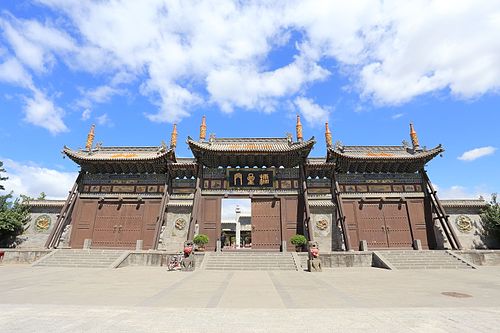
Gates of the wenmiao of Datong, Shanxi

Confucius in a fresco from a Western Han tomb in Dongping, Shandong

Worship at the Great Temple of Lord Zhang Hui (张挥公大殿; Zhāng Huī gōng dàdiàn), the cathedral ancestral shrine of the Zhang lineage corporation, at their ancestral home in Qinghe, Hebei