Nirvana
Videos
Nirvana, in the Indian religions, is the concept of an individual's passions being extinguished as the ultimate state of salvation, release, or liberation from suffering and from the cycle of birth an

Traditional mural painting depicting Gautama Buddha entering parinirvana. Dharma assembly pavilion, Wat Botum Wattey Reacheveraram, Phnom Penh, Cambodia
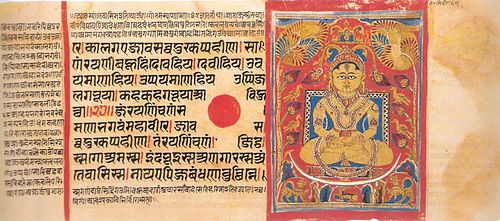
Kalpasutra folio on Mahavira Nirvana. Note the crescent shaped Siddhashila, a place where all siddhas reside after nirvana.
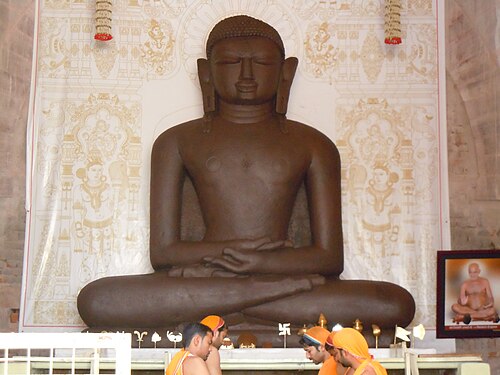
Rishabhanatha, believed to have lived millions of years ago, was the first Tirthankara to attain nirvana.
Moksha
Videos
Moksha, also called vimoksha, vimukti, and mukti, is a term in Jainism, Buddhism, Hinduism, and Sikhism for various forms of emancipation, liberation, nirvana, or release. In its soteriological and es
Nirvana
…liberation from suffering (duḥkha) and from the cycle of birth and rebirth (saṃsāra). In Indian religions, nirvana is sometimes used as a synonym of moksha and mukti. All Indian religions assert it to be a state of perfect quietude, freedom, and highest happiness; liberation from attachment and worldly…

Gajendra Moksha (pictured) is a symbolic tale in Vaishnavism. The elephant Gajendra enters a lake where a crocodile (Huhu) clutches his leg and becomes his suffering. Despite his pain, Gajendra constantly remembers Vishnu, who then liberates him. Gajendra symbolically represents human beings, Huhu represents sins, and the lake is saṃsāra.

Muktinath Temple ('Lord of liberation or Moksha) at Mustang, Nepal - a pilgrimage place for Hindus and Buddhists.

Jñāna yoga

Bhakti yoga