Nurhaci
Videos
Photos
Nurhaci, also known by his temple name as the Emperor Taizu of Qing, was the founding khan of the Jurchen-led Later Jin dynasty of China from 1616 to 1626.

Nurhaci

At the Battle of Sarhu Nurhaci defeated a four-pronged Chinese offensive intended to capture his capital of Hetu Ala by concentrating his forces in one column at a time.

Nurhaci captured Liaoyang in 1621 and made it the capital of his empire until 1625.

In 1621, Nurhaci started the construction of a new palace, the Mukden Palace, for his Later Jin dynasty's capital of Mukden (now Shenyang).
Jurchen people
Videos
Photos
Jurchen is a term used to collectively describe a number of East Asian Tungusic-speaking people. They lived in northeastern China, also known as Manchuria, before the 18th century. The Jurchens were renamed Manchus in 1635 by Hong Taiji. Different Jurchen groups lived as hunter-gatherers, pastoralist semi-nomads, or sedentary agriculturists. Generally lacking a central authority, and having little communication with each other, many Jurchen groups fell under the influence of neighbouring dynasties, their chiefs paying tribute and holding nominal posts as effectively hereditary commanders of border guards.

Siberians capturing a reindeer

A Jurchen man hunting from his horse, from a 15th-century ink and color painting on silk.

Qilang people (奇楞). Huang Qing Zhigong Tu, 1769
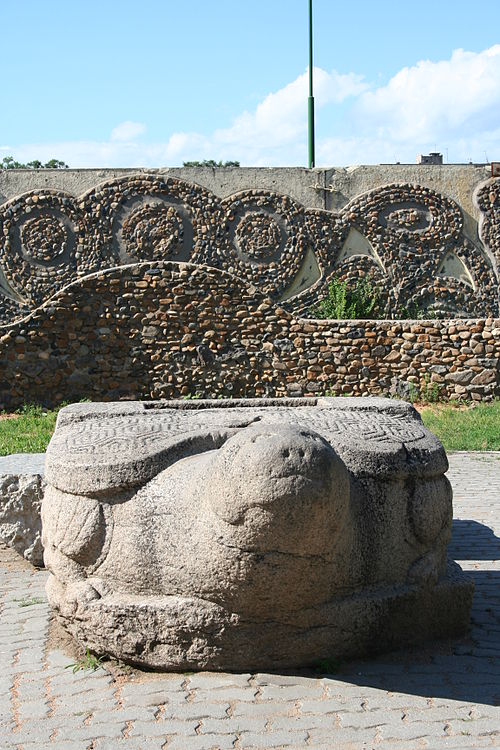
Bixi from the grave of a 12th-century Jurchen leader in today's Ussuriysk