Ocean
Videos
The ocean is the body of salt water that covers approximately 70.8% of Earth. The ocean is conventionally divided into large bodies of water, which are also referred to as oceans, and are themselves m

Pacific Ocean, largest part of Earth and its ocean, seen from space in 2023
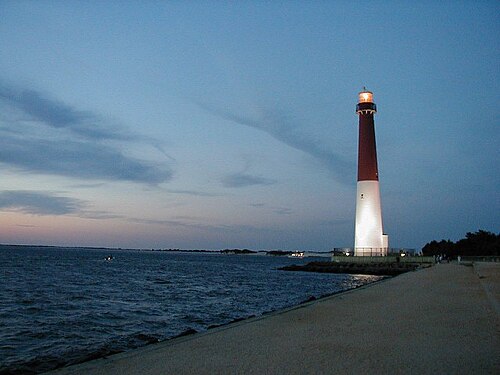
Lighthouse at the coast of Ocean County, New Jersey, U.S., facing the Atlantic Ocean at sunrise

The ocean is a major driver of Earth's water cycle.

High tide and low tide in the Bay of Fundy, Canada
Atlantic Ocean
Videos
The Atlantic Ocean is the second largest of the world's five oceans, with an area of about 85,133,000 square kilometers. It covers approximately 17% of Earth's surface and about 24% of its water surfa
Ocean
…ocean is conventionally divided into large bodies of water, which are also referred to as oceans (in descending order by area: the Pacific Ocean, the Atlantic Ocean, the Indian Ocean, the Antarctic/Southern Ocean, and the Arctic Ocean), and are themselves mostly divided into seas, gulfs and subsequent bodies of…

The Atlantic as seen from the shores of Clare Island, Ireland, in 1981

As the Gulf Stream meanders across the North Atlantic from the North American east coast to Western Europe its temperature drops by 20 °C (36 °F).
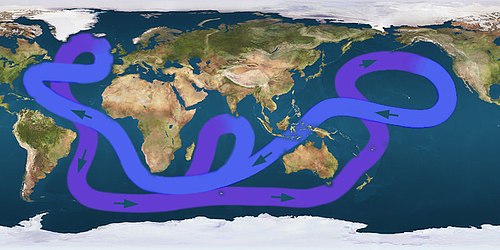
Path of the thermohaline circulation. Purple paths represent deep-water currents, while blue paths represent surface currents.

Sargassum fish (Histrio histrio)