Ohaguro
Videos
Ohaguro is the name given in Japan to the custom of blackening one's teeth with a solution of iron filings and vinegar. It was especially popular between the Heian and Edo periods, from the 10th century until the late 19th century, but the opening of the country to Western customs during the Meiji period led to its gradual disappearance. It was a tradition practiced mainly by married women and some men, almost always members of the aristocracy and samurai. In addition to Japanese society's preference for black teeth, it was also considered beneficial to health, as it prevented tooth decay by acting as a dental sealant. The practice of dyeing one's teeth black was also a known and widespread practice in southeastern China and Southeast Asia, although with different recipes.


Geisha blackening her teeth at 1:00 p.m.. Ukiyo-e by Tsukioka Yoshitoshi, number 13 in the series 24 hours in Shinbashi and Yanagibashi.

Ukiyo-e of Yama-uba caring for Kintarō in which her dark teeth are distinguishable

Nishiki-e by Utagawa Kunisada, from the series Three beauties making up their faces (1815). A geisha is seen making use of the complete set of traditional elements for blackening, most notably the mimidarai and watashigane as a support for the others.
Hikimayu
Videos
Hikimayu (引眉) was the practice of removing the natural eyebrows and painting smudge-like eyebrows on the forehead in pre-modern Japan, particularly in the Heian period (794–1185).

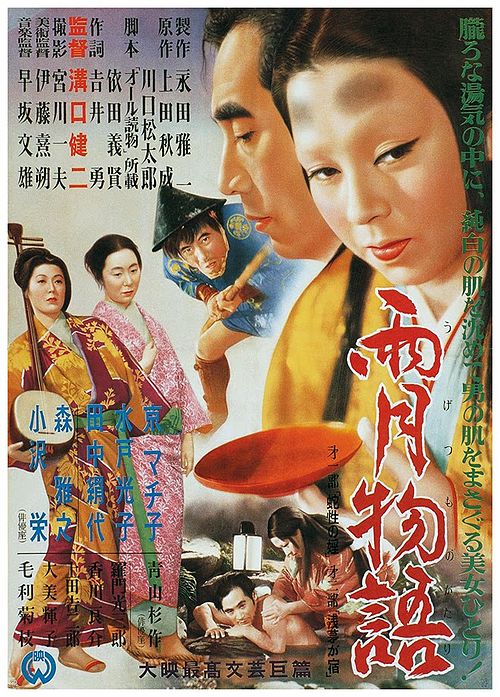
A poster for the 1953 film Ugetsu. The woman in the foreground has hikimayu.