Palm Sunday
Videos
Palm Sunday is the Christian moveable feast that falls on the Sunday before Easter. The feast commemorates Christ's triumphal entry into Jerusalem, an event mentioned in each of the four canonical Gos

Entry of Jesus Christ into Jerusalem (1320) by Pietro Lorenzetti: entering the city on a donkey symbolizes arrival in peace rather than as a war-waging king arriving on a horse.

Triumphal entry into Jerusalem, Russian icon (Cathedral of the Annunciation, Moscow)

"Flevit super illam" (He wept over it); by Enrique Simonet, 1892

Churches may distribute Christian crosses woven from blessed palms on Palm Sunday, or Christians may make palm crosses out of the palms that are distributed during Palm Sunday Mass.
Ash Wednesday
Videos
Ash Wednesday is a holy day of prayer and fasting in many Western Christian denominations. It is preceded by Shrove Tuesday and marks the first day of Lent: the seven weeks of prayer, fasting, and alm
Palm Sunday
…a basket in their narthex to collect these palms, which are then ritually burned on Shrove Tuesday to make the ashes to be used on the following day, Ash Wednesday, which is the first day of Lent. In Eastern Christianity, where Ash Wednesday is non-existent, it is typical to return the Palms the following Palm…

A cross marked in ash on a worshiper's forehead

The faithful receive ashes during the celebration of the Mass in an Evangelical-Lutheran parish church.
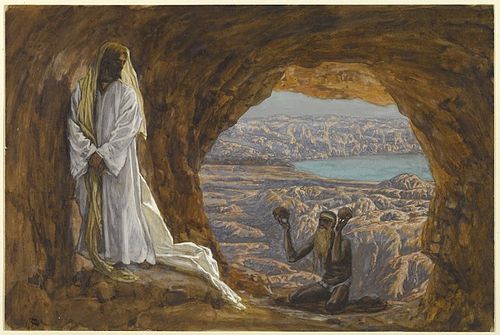
Jesus Tempted in the Wilderness (Jésus tenté dans le désert), James Tissot, Brooklyn Museum

A priest blesses ashes.