Papal States
Videos
The Papal States, officially the State of the Church, were a conglomeration of territories on the Italian Peninsula under the direct sovereign rule of the pope from 756 to 1870. They were among the ma

The Quirinal Palace, 1777
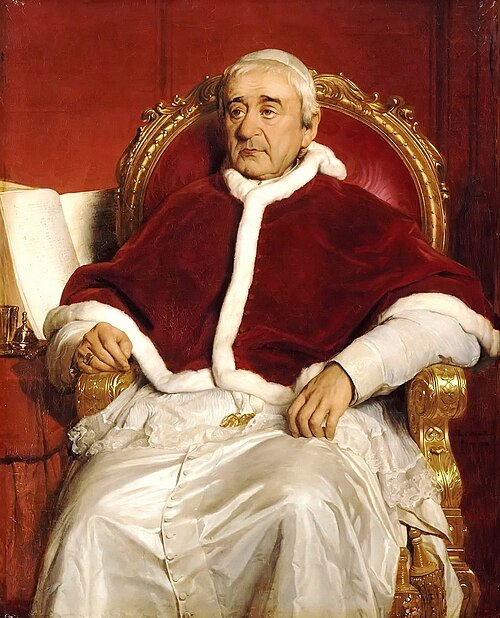
Pope Gregory XVI.

Barricades at Porta San Giovanni, photographed on 21 September 1870, after the breach of the Aurelian Walls

Men and women in traditional dress seated on a rocky outcrop in the Roman countryside, c. 1850–1853
Roman Republic (1849–1850)
Videos
The Roman Republic was a short-lived state declared on 9 February 1849, when the government of the Papal States was temporarily replaced by a republican government due to Pope Pius IX's departure to G
Papal States
…were suppressed by the intervention of the Austrian army. The nationalist and liberal revolutions of 1848 affected much of Europe. In February 1849 a Roman Republic was declared, and the hitherto liberally-inclined Pope Pius IX had to flee the city. The revolution was suppressed with French help in 1849 and Pius…

One of the emblems of the Roman Republic.

Proclamation of the Roman Republic in 1849, in Piazza del Popolo

Artillery battery and earthworks at the Aurelian Walls during the defense of Rome in 1849

Casino Savorelli after the French bombardments of Rome in 1849