Parable of the Wicked Husbandmen
Videos
Photos
The Parable of the Wicked Husbandmen, also known as the Parable of the Bad Tenants, is a parable of Jesus found in the Gospel of Matthew, the Gospel of Mark and the Gospel of Luke. It is also found in the non-canonical Gospel of Thomas. It describes a landowner planting a vineyard and letting it out to husbandmen who failed in their duties.

Part of the Greek text on Papyrus 104 (2nd century AD)

The Sanhedrin in the Temple in Jerusalem
Gospel of Mark
Videos
Photos
The Gospel of Mark is the second of the four canonical gospels and one of the three synoptic Gospels. It tells of the ministry of Jesus from his baptism by John the Baptist to his death, the burial of his body, and the discovery of his empty tomb. It portrays Jesus as a teacher, an exorcist, a healer, and a miracle worker, though it does not mention a miraculous birth or divine pre-existence. He refers to himself as the Son of Man. He is called the Son of God but keeps his messianic nature secret; even his disciples fail to understand him. All this is in keeping with the Christian interpretation of prophecy, which is believed to foretell the fate of the messiah as suffering servant.

Andrea Mantegna's St. Mark, 1448

Mark the Evangelist, 16th-century Russian icon
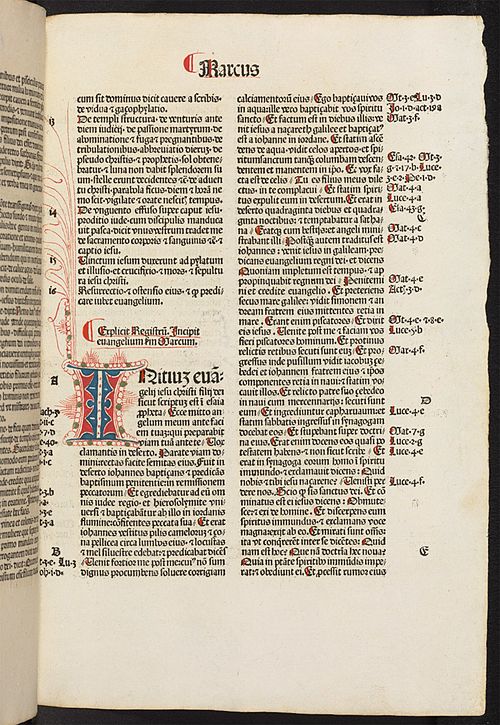
Page from Mark in a Latin Bible dated 1486 (Bodleian Library, Oxford)

First page of the Gospel of Mark: "The beginning of the gospel of Jesus Christ, the Son of God", by Sargis Pitsak (14th century)