Parinirvana
Videos
In Buddhism, parinirvana describes the state entered after death by someone who has attained nirvana during their lifetime. It implies a release from samsara, karma and rebirth as well as the dissolut

The death of the Buddha (Gautama Buddha), or Mahaparinirvana. Gandhara, 2–3rd century

Buddha attaining Parinirvana – Depicted in Cave 26 of Ajanta Caves – India

Attendants to the Parinirvana, Gandhara, Victoria and Albert museum

Buddha's parinirvana (death of Sakyamuni), Kamakura period, 13th century, wood. Tokyo National Museum
Kushinagar
Videos
Kushinagar is a town in the Kushinagar district in Uttar Pradesh, India. It is a Buddhist pilgrimage site where Gautama Buddha is believed to have attained parinirvana.
Parinirvana
…the Pāli Mahāvaṃsa. According to Bareau, the oldest core components of all these accounts are just the account of the Buddha's parinirvāṇa itself at Kuśinagara and the funerary rites following his death. He deems all other extended details to be later additions with little historical value. The parinirvāṇa of…
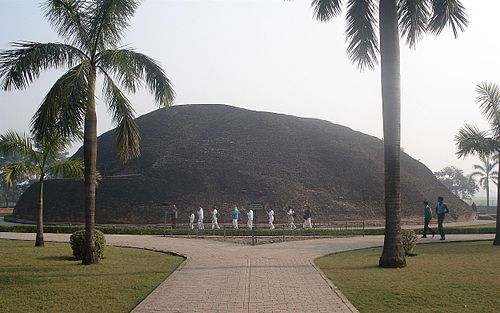
Ramabhar Stupa, built over part of the Buddha's ashes on the spot where he was cremated

Inside the Mahaparinirvana Temple

Ramabhar Stupa

Buddha statue at Matha Kuar site