Peasants' Revolt
Videos
The Peasants' Revolt, also named Wat Tyler's Rebellion or the Great Uprising, was a major uprising across large parts of England in 1381. The revolt had various causes, including the socio-economic an
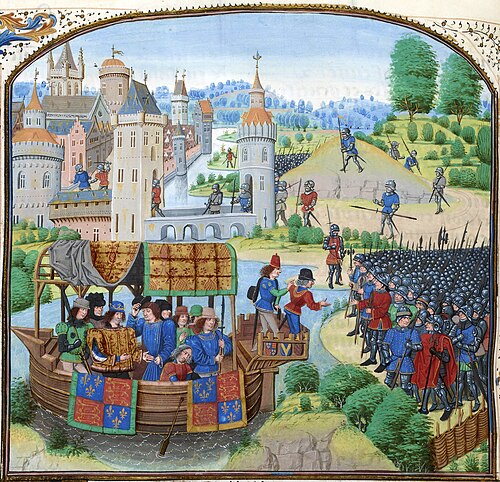
The boy-king Richard II meets the rebels on 14 June 1381

English soldiers landing in Normandy, c. 1380–1400, during the Hundred Years' War

15th-century depiction of Sudbury and Hales' murders

Peasant longbowmen at practice, from the Luttrell Psalter, c. 1320–1340
The Uprising (2026 film)
Videos
The Uprising is an upcoming action period drama film written, produced and directed by Paul Greengrass. It stars Andrew Garfield, Jamie Bell, Stephen Dillane, Tom Hollander, Cosmo Jarvis, Thomasin McK
Peasants' Revolt
…Templar destroyed in 1312, or that the fraternity of the Freemasons was covertly involved in organising the revolt. A film dramatizing the revolt, The Uprising, will be released September 10, 2026 in the United States and October 9, 2026 in the United Kingdom. The film stars Andrew Garfield and was directed…

Theatrical release poster with the original release date