Pelisse
Videos
A pelisse was originally a short fur-trimmed jacket which hussar light-cavalry soldiers from the 17th century onwards usually wore hanging loose over the left shoulder, ostensibly to prevent sword cut
1812 portrait of Charles Stewart wearing a pelisse slung over the shoulder

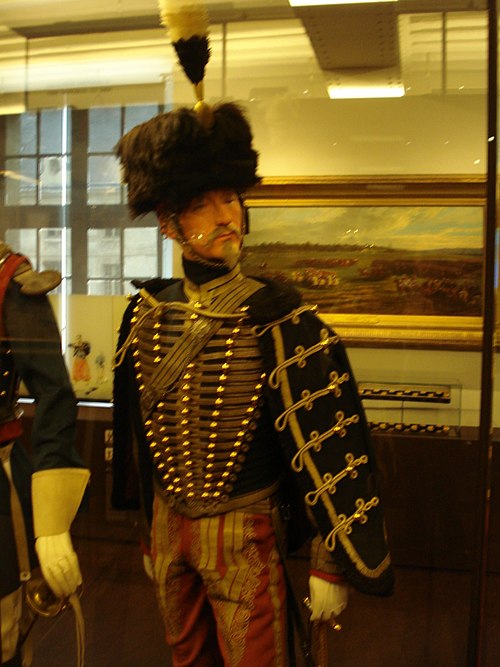
Uniform of French Second Empire Hussar with the characteristic loose-hanging pelisse over-jacket

Woman's fur-lined pelisse from Ackermann's Repository, Nov.1811

Green silk pelisse from La Belle Assemblée, Apr.1817
Hussar
Videos
A hussar was a member of a class of light cavalry, originally from the Kingdom of Hungary during the 15th and 16th centuries. The title and distinctive dress of these horsemen were subsequently widely
Pelisse
…A pelisse was originally a short fur-trimmed jacket which hussar light-cavalry soldiers from the 17th century onwards usually wore hanging loose over the left shoulder, ostensibly to prevent sword cuts. The name also…

Illustration of Archduke Stephen of Austria as a hussar

16th-century woodcut of a Hungarian hussar by Jost Amman

Painting of the Polish hussars by Aleksander Orłowski

Illustration of a Prussian Army hussar in 1763