Perseus
Videos
In Greek mythology, Perseus is the legendary founder of the Perseid dynasty. He was, alongside Cadmus and Bellerophon, the greatest Greek hero and slayer of monsters before the days of Heracles. He be
Perseus with the head of Medusa, first century AD, Museo Ostiense


Perseus with the Head of Medusa, Benvenuto Cellini, Loggia dei Lanzi, Florence

Perseus rescuing Andromeda from Cetus, depicted on an amphora in the Altes Museum, Berlin

Perseus and Andromeda, 1st century AD fresco from the Casa della Saffo, Pompeii; he shows her the Medusa's head reflected in a pool.
Heracles
Videos
Heracles, born Alcaeus or Alcides, was a divine hero in Greek mythology, the son of Zeus and Alcmene, and the foster son of Amphitryon. He was a descendant of Perseus, another son of Zeus.
Perseus
…legendary founder of the Perseid dynasty. He was, alongside Cadmus and Bellerophon, the greatest Greek hero and slayer of monsters before the days of Heracles. He beheaded the Gorgon Medusa for Polydectes and saved Andromeda from the sea monster Cetus. He was a demigod, being the son of Zeus and the mortal…
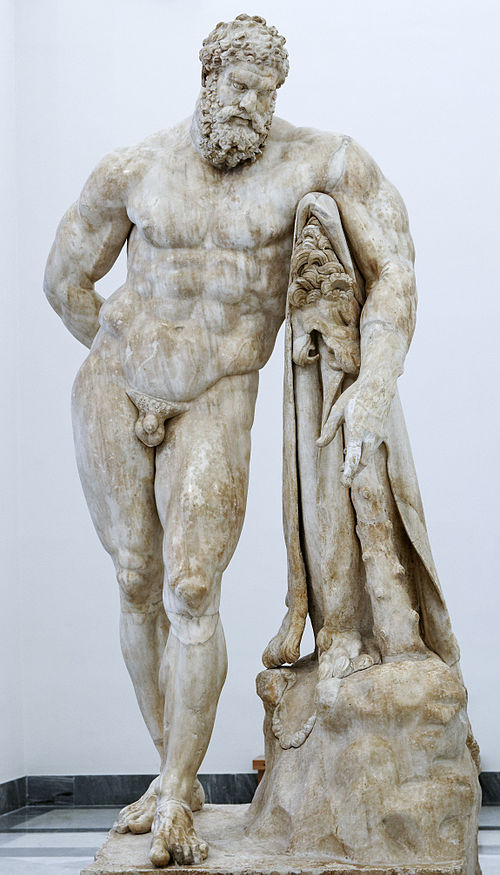
One of the most famous depictions of Heracles, Farnese Hercules, Roman marble statue on the basis of an original by Lysippos, 216 CE. National Archaeological Museum, Naples, Italy
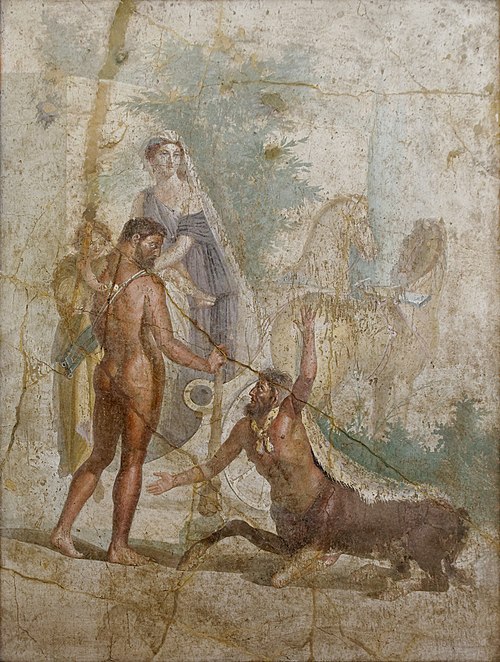
Heracles carrying his son Hyllus looks at the centaur Nessus, who is about to carry Deianira across the river on his back. Antique fresco from Pompeii.

Greek mythology influenced the Etruscans. This vase at Caere shows King Eurytus of Oechalia and Heracles in a symposium. Krater of corinthian columns called 'Krater of Eurytion', c. 600 BCE

Heracles strangling snakes (detail from an Attic red-figured stamnos, c. 480–470 BCE)