Phenakistoscope
Videos
The phenakistoscope was the first widespread animation device that created a fluid illusion of motion. Dubbed Fantascope and Stroboscopische Scheiben by its inventors, it has been known under many oth
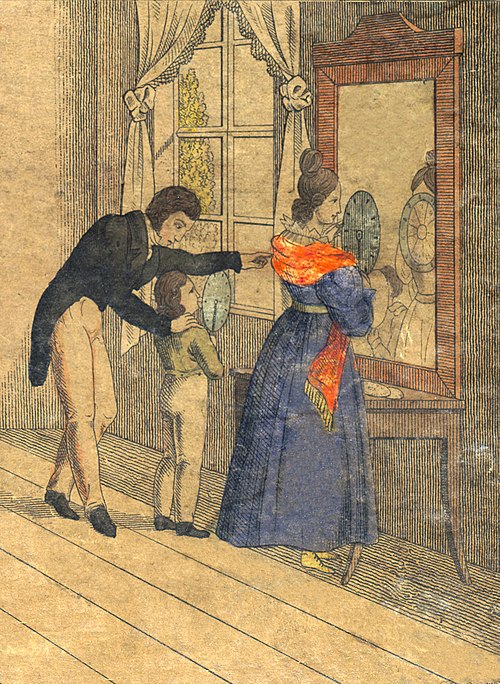
A family viewing animations in a mirror through the slits of stroboscopic discs (detail of an illustration by E. Schule on the box label for Magic Disk - Disques Magiques, c. 1833)

A "Phantasmascope" with cards on display in Bedford Museum, England.

Joseph Plateau's illustration in Corresp. Math. (1833)
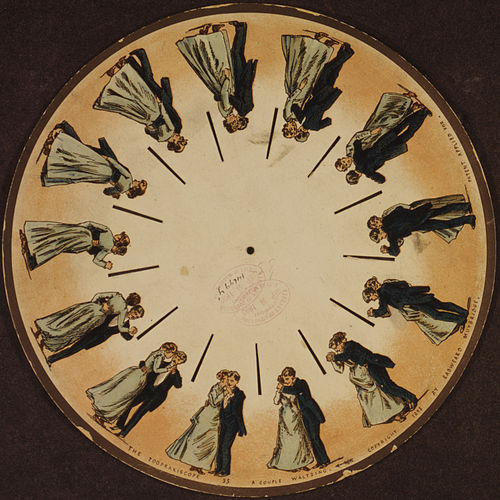
A paper zoopraxiscope disc by Eadweard Muybridge (1893)
Zoetrope
Videos
A zoetrope is a pre-film animation device that produces the illusion of motion, by displaying a sequence of drawings or photographs showing progressive phases of that motion. A zoetrope is a cylindric
Phenakistoscope
…opposite direction to that of the spinning disc. More images than slots and the images will drift in the same direction as the spinning disc. Unlike the zoetrope and other successors, common versions of the phénakisticope could only practically be viewed by one person at a time. The velocity of the disc causes…

A replica of a Victorian zoetrope

Device described in John Bate's The Mysteries of Nature and Art (1635)

Four phase animation device as depicted in Hopwood's Living Pictures (1899)

Czermak's 1855 Stereophoroskop