Photozincography of Domesday Book
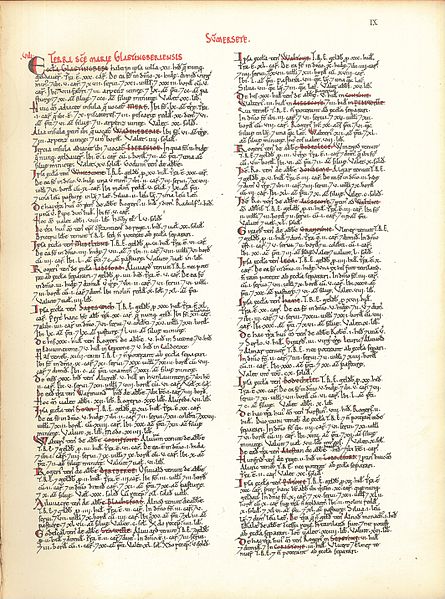
In the 1860s the first facsimile of Domesday Book was created by the process of photozincography, and was executed under the directorship of Henry James at the Southampton offices of the Ordnance Survey.
A page from the photozincographic edition of Domesday Book for Somersetshire (published in 1862), showing entries for some of the landholdings of Glastonbury Abbey
Domesday Book is a manuscript record of the Great Survey of much of England and parts of Wales completed in 1086 at the behest of King William the Conqueror. The manuscript was originally known by the Latin name Liber de Wintonia, meaning "Book of Winchester", where it was originally kept in the royal treasury. The Anglo-Saxon Chronicle states that in 1085 the king sent his agents to survey every shire in England, to list his holdings and dues owed to him.
Domesday Book: an engraving published in 1900. Great Domesday (the larger volume) and Little Domesday (the smaller volume), in their 1869 bindings, lie on their older "Tudor" bindings.
Great Domesday in its "Tudor" binding: a wood-engraving of the 1860s
The Domesday Chest, the German-style iron-bound chest of c. 1500 in which Domesday Book was kept in the 17th and 18th centuries
Entries for Croydon and Cheam, Surrey, in the 1783 printed edition of Domesday Book