Physicist
Videos
A physicist is a scientist who specializes in the field of physics, which encompasses the interactions of matter and energy at all length and time scales in the physical universe. Physicists generally
Albert Einstein, a key theoretical physicist in the twentieth century who developed the theory of relativity and parts of early quantum theory


In an 18th-century experiment in "natural philosophy" (later to be called "physics") English scientist Francis Hauksbee works with an early electrostatic generator.

Experimental physicists at work at the accelerator laboratory of the University of Jyväskylä (Finland)
Theoretical physics
Videos
Theoretical physics is a branch of physics that uses mathematical models and abstractions of physical objects and systems to explain and predict natural phenomena. It is, in the broadest sense, the at
Physicist
…types of physicists: experimental physicists who specialize in the observation of natural phenomena and the development and analysis of experiments, and theoretical physicists who specialize in mathematical modeling of physical systems to rationalize, explain and predict natural phenomena. Physicists can apply their knowledge…
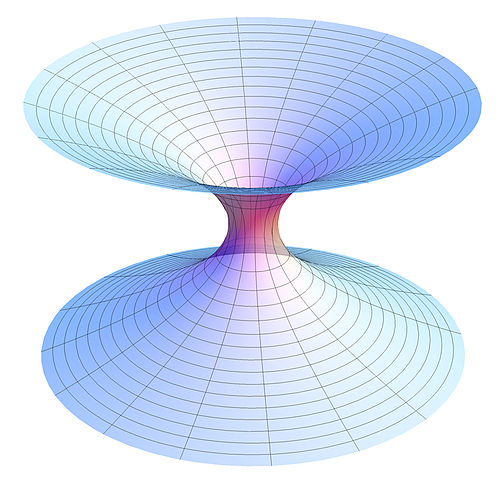
Visual representation of a Schwarzschild wormhole. Wormholes have never been observed, but they are predicted by mathematical models in general relativity.

The title page of the second edition (1713) of Newton's Philosophiae Naturalis Principia Mathematica. The first edition appeared in 1687 and is widely regarded as the founding document of theoretical physics in the modern sense.